Word Explanation
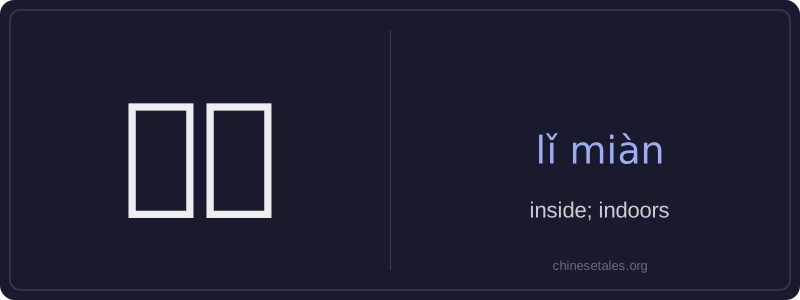
'里面' (lǐ miàn) literally combines '里' (lǐ), meaning 'inside' or 'within', and '面' (miàn), meaning 'surface' or 'side'. Together, they form a compound that means 'inside' or 'indoors' — referring to the interior space of something physical, like a room, container, or building. It functions as both a noun ('the inside') and an adverb ('inside [somewhere]').
It’s commonly used after location words (e.g., 房间里面, 盒子里面) or with verbs of motion or position (e.g., 进去、在、坐). Unlike the standalone character '里', which can mean 'village' or be a measure word, '里面' is strictly spatial and never used for abstract 'interior' in formal or metaphorical senses (e.g., not for 'inner feelings'). It’s neutral in register and widely used in daily speech and writing.
Example Sentences
Related Words
我的
我的 (wǒ de) is a possessive pronoun meaning 'my'
在家
'Zài jiā' literally combines the preposition 'z
不对
不对 (bù duì) literally combines 不 (bù), meani
这边
这边 (zhè biān) literally combines 这 (zhè, 'th
中国
‘Zhōngguó’ literally means ‘Middle Kingdom’
中学
'Zhōngxué' literally combines 'zhōng' (middle)
红色的
红色的 (hóng sè de) is an adjective meaning 'red
一天
‘一天’ literally combines the numeral ‘一’ (y