Word Explanation
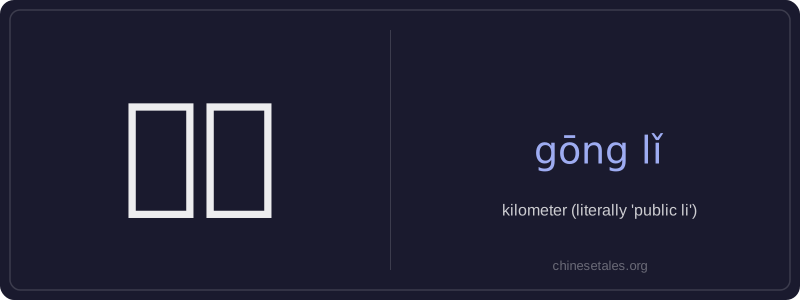
‘公里’ (gōng lǐ) is the standard Chinese unit for ‘kilometer’, equal to 1,000 meters. Literally, 公 means ‘public’ or ‘standard’, and 里 (lǐ) is a traditional Chinese unit of distance — roughly 500 meters in modern usage. Together, 公里 signifies the standardized, metric version of the 里, adopted nationwide for consistency with the International System of Units. It’s used universally in China and other Mandarin-speaking regions for road signs, maps, sports, transportation, and everyday measurements of medium-to-long distances.
This term appears frequently in contexts involving travel, geography, fitness, and urban planning. Unlike the older 里, which still survives in idioms or historical references, 公里 carries no colloquial or literary connotation — it’s strictly formal and technical. Speakers never omit the character 公 when referring to the metric kilometer; saying just 里 would mean the traditional unit (≈0.5 km) and cause confusion in precise contexts like navigation or official documents.
Example Sentences
Related Words
我的
我的 (wǒ de) is a possessive pronoun meaning 'my'
在家
'Zài jiā' literally combines the preposition 'z
不对
不对 (bù duì) literally combines 不 (bù), meani
这边
这边 (zhè biān) literally combines 这 (zhè, 'th
中国
‘Zhōngguó’ literally means ‘Middle Kingdom’
中学
'Zhōngxué' literally combines 'zhōng' (middle)
红色的
红色的 (hóng sè de) is an adjective meaning 'red
一天
‘一天’ literally combines the numeral ‘一’ (y