Word Explanation
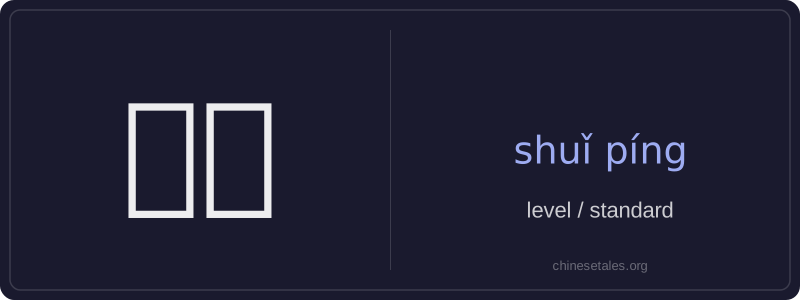
水平 literally means 'water level'—combining 水 (shuǐ, 'water') and 平 (píng, 'flat' or 'level'). Over time, it evolved metaphorically to mean 'level' or 'standard' in terms of ability, skill, quality, or development. It’s commonly used to describe how advanced or proficient someone is in a field (e.g., language, math, sports) or how developed something is (e.g., economic, technological, or educational standards).
This noun appears frequently in both formal and informal contexts—whether assessing a student’s Chinese proficiency, comparing regional infrastructure, or evaluating workplace performance. Unlike verbs or adjectives, 水平 itself doesn’t change form; it always functions as a noun and typically follows measure words like '个' or modifiers like '高' (high), '低' (low), '国际' (international), or '专业' (professional). It’s rarely used alone without a modifier or context, and never as a verb or adjective.
Example Sentences
Related Words
我的
我的 (wǒ de) is a possessive pronoun meaning 'my'
一天
‘一天’ literally combines the numeral ‘一’ (y
在家
'Zài jiā' literally combines the preposition 'z
不对
不对 (bù duì) literally combines 不 (bù), meani
这边
这边 (zhè biān) literally combines 这 (zhè, 'th
中国
‘Zhōngguó’ literally means ‘Middle Kingdom’
中学
'Zhōngxué' literally combines 'zhōng' (middle)
红色的
红色的 (hóng sè de) is an adjective meaning 'red