Word Explanation
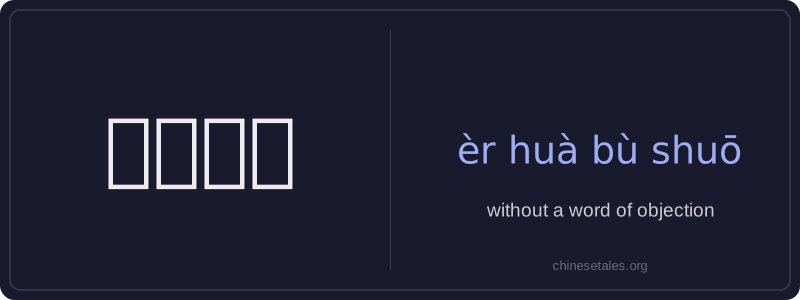
'Èr huà bù shuō' literally means 'not saying a second word' — implying immediate, unquestioning action without hesitation or protest. The phrase combines 'èr' (second), 'huà' (word/speech), 'bù' (not), and 'shuō' (to speak). It emphasizes decisiveness and readiness, often reflecting strong determination, loyalty, or urgency. Though it contains the number 'two', it's not about counting — 'èr huà' idiomatically refers to any unnecessary or redundant speech after the first (i.e., objections or excuses).
This expression is commonly used in spoken Mandarin to describe someone’s swift, resolute response — especially when accepting responsibility, helping others, or carrying out orders. It conveys emotional immediacy: no deliberation, no bargaining, no delay. It appears frequently in narratives involving friendship, duty, crisis response, or moral conviction, and carries a slightly literary but still everyday tone.
Example Sentences
Related Words
我的
我的 (wǒ de) is a possessive pronoun meaning 'my'
一天
‘一天’ literally combines the numeral ‘一’ (y
在家
'Zài jiā' literally combines the preposition 'z
不对
不对 (bù duì) literally combines 不 (bù), meani
这边
这边 (zhè biān) literally combines 这 (zhè, 'th
中国
‘Zhōngguó’ literally means ‘Middle Kingdom’
中学
'Zhōngxué' literally combines 'zhōng' (middle)
红色的
红色的 (hóng sè de) is an adjective meaning 'red