Word Explanation
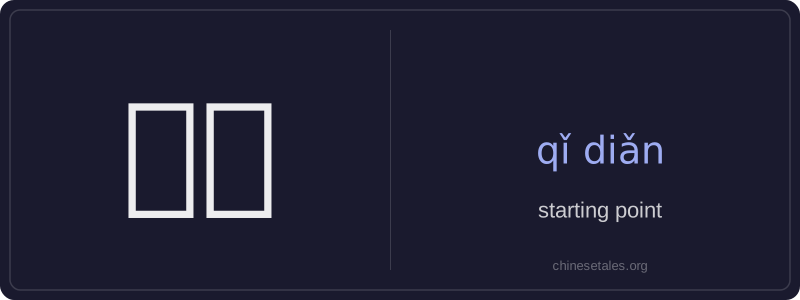
起点 (qǐ diǎn) literally combines 起 (qǐ), meaning 'to rise', 'to begin', or 'to start', and 点 (diǎn), meaning 'point' or 'spot'. Together, they form a compound noun meaning 'starting point' — the precise location, moment, or condition from which something begins. It’s commonly used in physical contexts (e.g., race courses, maps, travel routes) and abstract ones (e.g., career development, learning journeys, or project planning).
The word carries a neutral-to-formal register and appears frequently in educational, athletic, transportation, and strategic settings. Unlike the more colloquial 开头 (kāi tóu) or 开始 (kāi shǐ), which emphasize the act or time of beginning, 起点 emphasizes the origin *place* or *position* — often implying a defined reference point for measurement, comparison, or progression.
Example Sentences
Related Words
我的
我的 (wǒ de) is a possessive pronoun meaning 'my'
一天
‘一天’ literally combines the numeral ‘一’ (y
在家
'Zài jiā' literally combines the preposition 'z
不对
不对 (bù duì) literally combines 不 (bù), meani
这边
这边 (zhè biān) literally combines 这 (zhè, 'th
中国
‘Zhōngguó’ literally means ‘Middle Kingdom’
中学
'Zhōngxué' literally combines 'zhōng' (middle)
红色的
红色的 (hóng sè de) is an adjective meaning 'red