Word Explanation
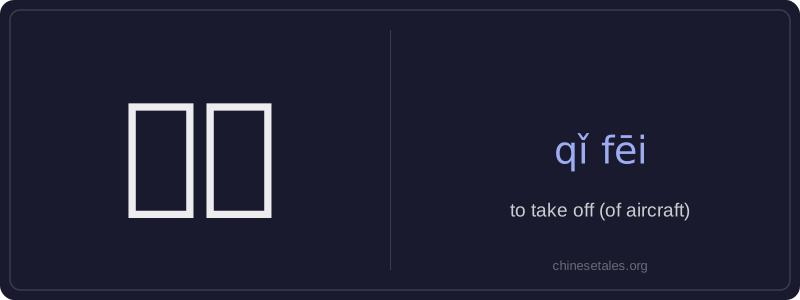
起飞 (qǐ fēi) literally combines 起 (qǐ), meaning 'to rise' or 'to begin', and 飞 (fēi), meaning 'to fly'. Together, they form a verb meaning 'to take off'—specifically referring to an aircraft ascending from the ground into flight. It is used exclusively for airplanes, helicopters, drones, and other flying vehicles—not for birds or people jumping. The term appears frequently in aviation contexts, airport announcements, weather reports, and travel planning.
起飞 is a separable verb in structure but functions as a single unit in most usage; you wouldn’t insert objects between 起 and 飞. It often appears with time expressions (e.g., 'at 3 p.m.'), directional complements (e.g., 起飞了 — 'has taken off'), or aspect particles like 了 or 着. While it can occasionally be used metaphorically (e.g., for a business 'taking off'), such usage is rare and marked—standard meaning remains strictly aviation-related.
Example Sentences
Related Words
我的
我的 (wǒ de) is a possessive pronoun meaning 'my'
一天
‘一天’ literally combines the numeral ‘一’ (y
在家
'Zài jiā' literally combines the preposition 'z
不对
不对 (bù duì) literally combines 不 (bù), meani
这边
这边 (zhè biān) literally combines 这 (zhè, 'th
中国
‘Zhōngguó’ literally means ‘Middle Kingdom’
中学
'Zhōngxué' literally combines 'zhōng' (middle)
红色的
红色的 (hóng sè de) is an adjective meaning 'red