Word Explanation
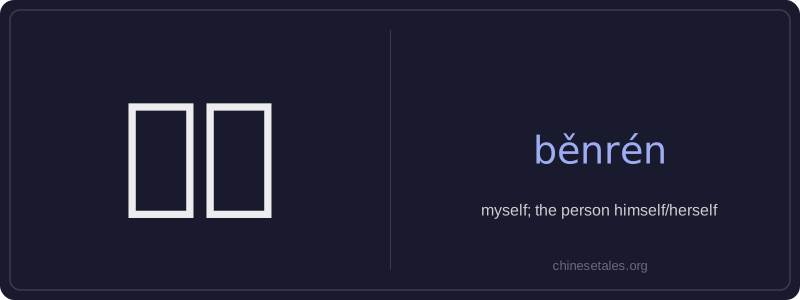
本人 literally means 'this person' — 本 (běn) means 'this' or 'origin', and 人 (rén) means 'person'. Together, they form a formal, self-referential pronoun meaning 'myself' or 'the person himself/herself'. It is used to emphasize personal identity or responsibility, especially in official, written, or polite spoken contexts — such as identification, contracts, applications, or formal introductions. Unlike 我 (wǒ), which is neutral and conversational, 本人 carries a tone of seriousness, objectivity, or institutional formality.
This word is commonly used when speaking about oneself in third-person style for clarity or professionalism — for example, on ID cards, registration forms, or customer service interactions. It avoids ambiguity when distinguishing the speaker from others in the same situation. While grammatically functioning like a pronoun, 本人 cannot be used with plural markers (e.g., *本人们) and rarely appears in casual speech among friends or family.
Example Sentences
Related Words
我的
我的 (wǒ de) is a possessive pronoun meaning 'my'
这边
这边 (zhè biān) literally combines 这 (zhè, 'th
中国
‘Zhōngguó’ literally means ‘Middle Kingdom’
一天
‘一天’ literally combines the numeral ‘一’ (y
一心
‘一心’ literally combines ‘one’ (一) and ‘hea
在家
'Zài jiā' literally combines the preposition 'z
不对
不对 (bù duì) literally combines 不 (bù), meani
中学
'Zhōngxué' literally combines 'zhōng' (middle)