Word Explanation
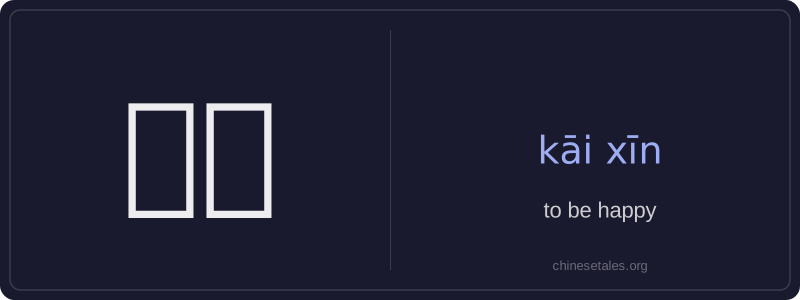
开心 (kāi xīn) literally means 'to open the heart' — a vivid metaphor for letting joy flow freely, unblocked by worry or sadness. Though written with two characters, it functions as a single adjective meaning 'happy', 'pleased', or 'delighted'. It’s widely used in everyday spoken and written Chinese to describe positive emotional states, especially in informal or warm contexts — such as reacting to good news, enjoying time with friends, or expressing gratitude.
Unlike more formal synonyms like 高兴 (gāo xìng), 开心 feels lighter, friendlier, and more spontaneous. It can appear before a noun ('a happy person'), after 是 ('She is happy'), or at the end of a sentence ('I’m so happy!'). It’s also common in fixed expressions like 开心果 (kāi xīn guǒ, 'funny person') and in exclamations like 太开心了!(Tài kāi xīn le! — 'So happy!'). While not used in solemn or official registers, it’s perfectly appropriate in emails to friends, social media posts, or casual conversations.
Example Sentences
Related Words
我的
我的 (wǒ de) is a possessive pronoun meaning 'my'
这边
这边 (zhè biān) literally combines 这 (zhè, 'th
中国
‘Zhōngguó’ literally means ‘Middle Kingdom’
一天
‘一天’ literally combines the numeral ‘一’ (y
一心
‘一心’ literally combines ‘one’ (一) and ‘hea
在家
'Zài jiā' literally combines the preposition 'z
不对
不对 (bù duì) literally combines 不 (bù), meani
中学
'Zhōngxué' literally combines 'zhōng' (middle)