Word Explanation
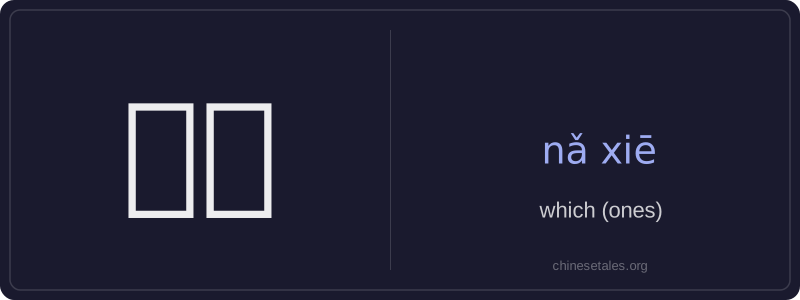
'哪些' (nǎ xiē) is a plural interrogative pronoun meaning 'which (ones)' — used to ask about multiple specific items from a known or implied set. It combines the question word '哪' (nǎ), meaning 'which', with the plural marker '些' (xiē), meaning 'some' or 'a few'. Unlike '哪个' (nǎ ge), which asks about a single item, '哪些' always refers to two or more things, people, or concepts. It functions like an adjective before a noun (e.g., 哪些动物) or as a standalone pronoun (e.g., 哪些是你喜欢的?).
This term appears frequently in questions involving selection, comparison, or identification — especially when the speaker assumes the listener knows the possible options (e.g., a list of animals, books, or courses). It is neutral in register and appropriate in both spoken and written Chinese. Note that '哪些' cannot stand alone without context; it must co-occur with a noun or be followed by a verb phrase clarifying the scope of inquiry.
Example Sentences
Related Words
我的
我的 (wǒ de) is a possessive pronoun meaning 'my'
这边
这边 (zhè biān) literally combines 这 (zhè, 'th
中国
‘Zhōngguó’ literally means ‘Middle Kingdom’
一天
‘一天’ literally combines the numeral ‘一’ (y
一心
‘一心’ literally combines ‘one’ (一) and ‘hea
在家
'Zài jiā' literally combines the preposition 'z
不对
不对 (bù duì) literally combines 不 (bù), meani
这么
这么 (zhè me) is an adverb meaning 'so' or 'this