Word Explanation
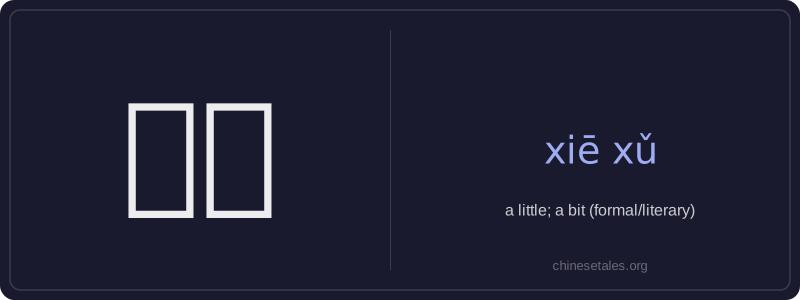
些许 (xiē xǔ) is an adverb meaning 'a little' or 'a bit', used to indicate a small degree or amount. Though composed of two characters—些 (xiē), meaning 'some' or 'a few', and 许 (xǔ), meaning 'to permit' or 'to allow'—together they form a fixed literary expression conveying modest quantity or intensity. It is more formal and elegant than colloquial alternatives like 一点 (yì diǎn) or 有点儿 (yǒu diǎnr), and appears frequently in written Chinese, essays, formal speeches, and refined spoken contexts such as news reports or literary narration.
Unlike standalone quantifiers, 少许 functions only attributively before verbs or adjectives—not before nouns—and never carries measure words. It often modifies emotional states (e.g., 少许忧虑), sensory perceptions (e.g., 少许苦味), or abstract qualities (e.g., 少许遗憾). Its tone is restrained and understated, making it especially suitable for expressing subtle, nuanced feelings without exaggeration.
Example Sentences
Related Words
我的
我的 (wǒ de) is a possessive pronoun meaning 'my'
这边
这边 (zhè biān) literally combines 这 (zhè, 'th
中国
‘Zhōngguó’ literally means ‘Middle Kingdom’
一天
‘一天’ literally combines the numeral ‘一’ (y
一心
‘一心’ literally combines ‘one’ (一) and ‘hea
在家
'Zài jiā' literally combines the preposition 'z
不对
不对 (bù duì) literally combines 不 (bù), meani
这么
这么 (zhè me) is an adverb meaning 'so' or 'this