Word Explanation
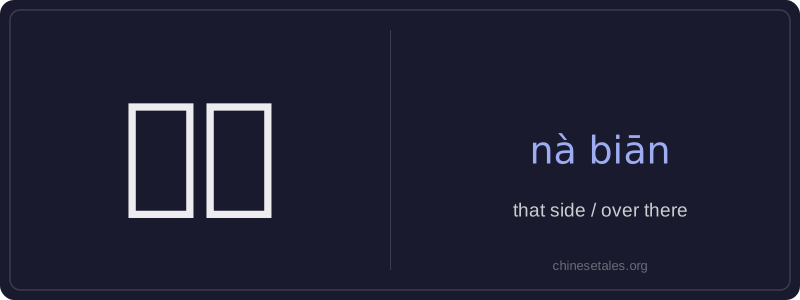
那边 (nà biān) literally combines 那 (nà), meaning 'that', and 边 (biān), meaning 'side' or 'edge'. Together, it means 'that side' or 'over there'—referring to a location away from both the speaker and listener, but not as distant as 那儿 (nàr) or 那里 (nàlǐ). It’s commonly used to point out places, objects, or people at a visible but non-immediate distance.
This word functions flexibly: as a noun (e.g., 去那边 — 'go over there'), or as an adverb modifying verbs of motion or direction (e.g., 看那边 — 'look over there'). It’s neutral in register—appropriate for casual speech, directions, instructions, or descriptive narration—and often appears with directional verbs like 走、去、看、在, or with prepositions like 在 or 往.
Example Sentences
Related Words
我的
我的 (wǒ de) is a possessive pronoun meaning 'my'
这边
这边 (zhè biān) literally combines 这 (zhè, 'th
中国
‘Zhōngguó’ literally means ‘Middle Kingdom’
一天
‘一天’ literally combines the numeral ‘一’ (y
一心
‘一心’ literally combines ‘one’ (一) and ‘hea
在家
'Zài jiā' literally combines the preposition 'z
不对
不对 (bù duì) literally combines 不 (bù), meani
这么
这么 (zhè me) is an adverb meaning 'so' or 'this