Word Explanation
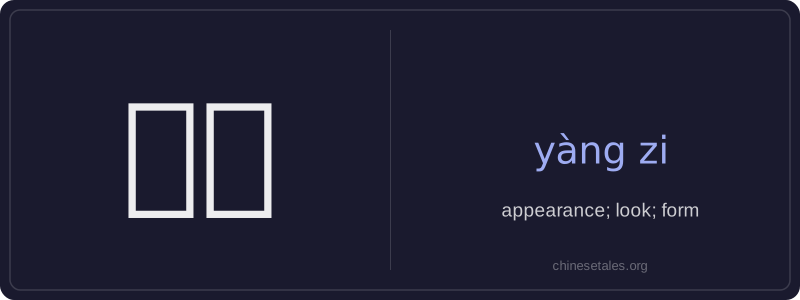
'样子' (yàng zi) is a noun meaning 'appearance', 'look', or 'form' — how something visually presents itself. The first character 样 (yàng) means 'style', 'type', or 'pattern', while 子 (zi) is a common nominal suffix that adds concreteness and colloquial softness, turning the abstract idea into a tangible, observable quality. Together, they refer to the outward visual impression of a person, object, animal, or even an abstract concept like a situation.
This word is frequently used in everyday speech to describe physical features, expressions, or general impressions — for instance, asking 'What does it look like?' (它什么样子?), commenting on someone’s facial expression ('他一脸惊讶的样子'), or comparing appearances ('这两只猫的样子很像'). It’s neutral in register, widely understood across ages and regions, and often appears after demonstratives (这/那) or adjectives (奇怪的、可爱的). Unlike formal synonyms like '形态' or '外貌', '样子' carries warmth and immediacy, making it ideal for descriptive, conversational Chinese.
Example Sentences
Related Words
我的
我的 (wǒ de) is a possessive pronoun meaning 'my'
这边
这边 (zhè biān) literally combines 这 (zhè, 'th
中国
‘Zhōngguó’ literally means ‘Middle Kingdom’
一天
‘一天’ literally combines the numeral ‘一’ (y
一心
‘一心’ literally combines ‘one’ (一) and ‘hea
在家
'Zài jiā' literally combines the preposition 'z
不对
不对 (bù duì) literally combines 不 (bù), meani
这么
这么 (zhè me) is an adverb meaning 'so' or 'this