Word Explanation
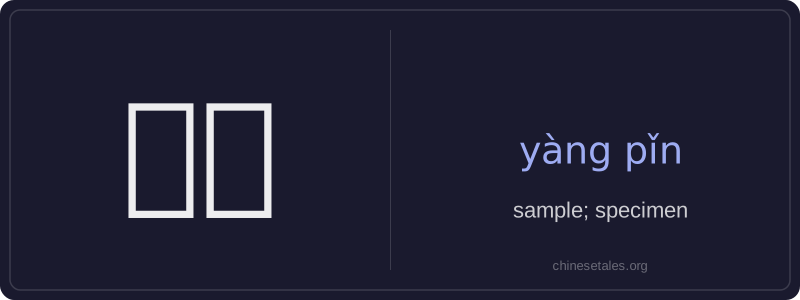
'样品' (yàng pǐn) literally combines '样' (yàng), meaning 'type', 'kind', or 'model', and '品' (pǐn), meaning 'item', 'product', or 'article'. Together, they refer to a representative item selected from a larger group for inspection, testing, or demonstration — essentially a 'sample' or 'specimen'. It is commonly used in commercial, scientific, and industrial contexts, such as when evaluating product quality, conducting lab analysis, or displaying goods before bulk purchase.
Unlike casual terms like '一点' (a little bit), '样品' carries a formal, functional connotation — it implies purposeful selection for evaluation or verification. It’s frequently seen on packaging ('内附样品' — 'includes sample'), in laboratories ('血液样品' — 'blood specimen'), or at trade fairs ('展示样品' — 'display samples'). While often interchangeable with '样本' (yàngběn) in scientific settings, '样品' emphasizes physical, tangible objects, especially manufactured or collected items.
Example Sentences
Related Words
我的
我的 (wǒ de) is a possessive pronoun meaning 'my'
这边
这边 (zhè biān) literally combines 这 (zhè, 'th
中国
‘Zhōngguó’ literally means ‘Middle Kingdom’
一天
‘一天’ literally combines the numeral ‘一’ (y
一心
‘一心’ literally combines ‘one’ (一) and ‘hea
在家
'Zài jiā' literally combines the preposition 'z
不对
不对 (bù duì) literally combines 不 (bù), meani
这么
这么 (zhè me) is an adverb meaning 'so' or 'this