Word Explanation
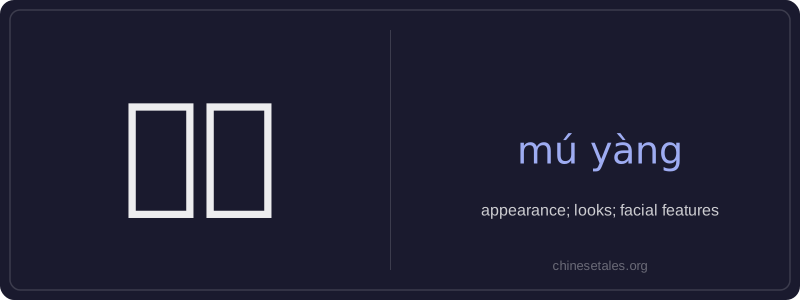
‘模样’ (mú yàng) is a noun meaning ‘appearance’, ‘looks’, or ‘facial features’, often emphasizing outward physical characteristics—especially those that are distinctive, recognizable, or expressive. Though both characters individually can mean ‘model’ or ‘form’ (模) and ‘type’ or ‘form’ (样), together they function as a fixed compound with no separable meaning: 模 does not carry its usual ‘mō’ pronunciation here, and the pair always appears as a single unit. It’s commonly used to describe people (e.g., a child’s facial features resembling a parent), animals (e.g., a dog’s breed-typical look), or even inanimate things with visual distinctiveness (e.g., an old building’s weathered appearance).
The word carries a slightly literary or descriptive tone—not slangy or overly formal—and often appears after demonstratives (这/那/什么) or adjectives like ‘老’ (old), ‘怪’ (odd), or ‘俊’ (handsome). It’s rarely used in isolation; instead, it typically follows a modifier or appears in phrases like ‘长得什么模样’ (What do you look like?) or ‘这副模样’ (this appearance). Unlike ‘样子’, which is more general and colloquial, ‘模样’ subtly emphasizes tangible, observable physical traits.
Example Sentences
Related Words
我的
我的 (wǒ de) is a possessive pronoun meaning 'my'
这边
这边 (zhè biān) literally combines 这 (zhè, 'th
中国
‘Zhōngguó’ literally means ‘Middle Kingdom’
一天
‘一天’ literally combines the numeral ‘一’ (y
一心
‘一心’ literally combines ‘one’ (一) and ‘hea
在家
'Zài jiā' literally combines the preposition 'z
不对
不对 (bù duì) literally combines 不 (bù), meani
这么
这么 (zhè me) is an adverb meaning 'so' or 'this