Word Explanation
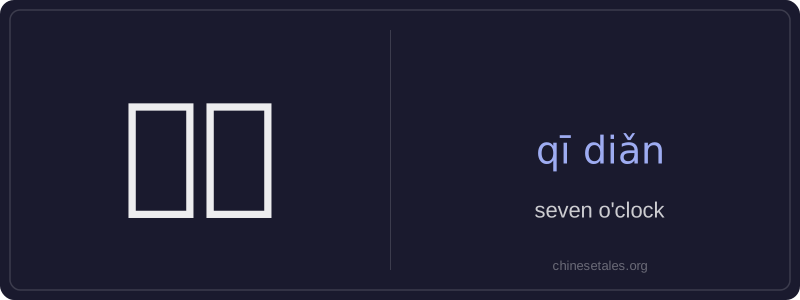
'七点' (qī diǎn) literally combines the numeral 七 (qī, 'seven') and the measure word 点 (diǎn, 'o'clock'), forming a standard time expression meaning 'seven o'clock'. In Chinese, time is expressed using numerals followed by 点, with no colon or 'a.m./p.m.' distinction—context or additional words like 上午 (shàngwǔ, 'morning') or 晚上 (wǎnshàng, 'evening') clarify whether it's 7 a.m. or 7 p.m. The word functions as a noun and often serves as a temporal complement in sentences, typically appearing after verbs like 是 (shì), 到 (dào), or 在 (zài).
This phrase is used daily in schedules, appointments, and casual conversation—for example, when stating class times, meeting hours, or bedtime. It follows the same pattern as other hour expressions (e.g., 八点, 三点), making it part of a highly regular and predictable system. Unlike English, Chinese does not use 'o'clock' as a separate word; 点 itself carries that meaning and cannot be omitted.
Example Sentences
Related Words
我的
我的 (wǒ de) is a possessive pronoun meaning 'my'
这边
这边 (zhè biān) literally combines 这 (zhè, 'th
这么
这么 (zhè me) is an adverb meaning 'so' or 'this
中国
‘Zhōngguó’ literally means ‘Middle Kingdom’
一天
‘一天’ literally combines the numeral ‘一’ (y
一心
‘一心’ literally combines ‘one’ (一) and ‘hea
在家
'Zài jiā' literally combines the preposition 'z
不对
不对 (bù duì) literally combines 不 (bù), meani