Word Explanation
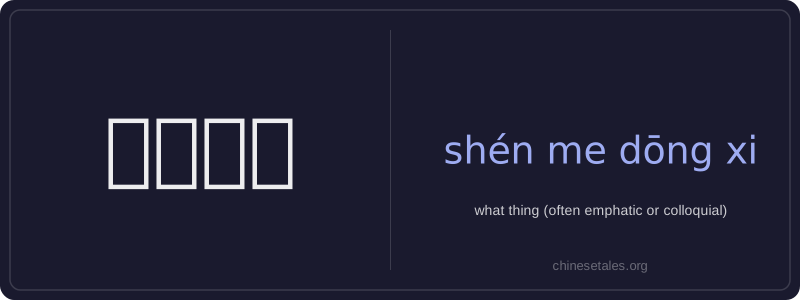
'Shén me dōng xi' literally combines 'shén me' (what) and 'dōng xi' (thing, object), forming a colloquial noun phrase meaning 'what thing'—but it's rarely used neutrally. In spoken Mandarin, it often carries emphasis, surprise, irritation, or dismissiveness, similar to English expressions like 'what on earth?' or 'what the heck?'. It functions as an interrogative pronoun or emphatic noun, frequently appearing in exclamatory or rhetorical questions.
The phrase is highly context-sensitive: tone, facial expression, and sentence structure determine whether it sounds curious, annoyed, or even playful. While 'shén me' alone means 'what', adding 'dōng xi' shifts focus from abstract inquiry to concrete, often tangible, things—and usually implies skepticism or disbelief about the nature or validity of something mentioned. It’s common in informal speech among friends or family but avoided in formal writing or polite requests.
Example Sentences
Related Words
我的
我的 (wǒ de) is a possessive pronoun meaning 'my'
这么
这么 (zhè me) is an adverb meaning 'so' or 'this
这边
这边 (zhè biān) literally combines 这 (zhè, 'th
中国
‘Zhōngguó’ literally means ‘Middle Kingdom’
中学
'Zhōngxué' literally combines 'zhōng' (middle)
一天
‘一天’ literally combines the numeral ‘一’ (y
一心
‘一心’ literally combines ‘one’ (一) and ‘hea
在家
'Zài jiā' literally combines the preposition 'z