Word Explanation
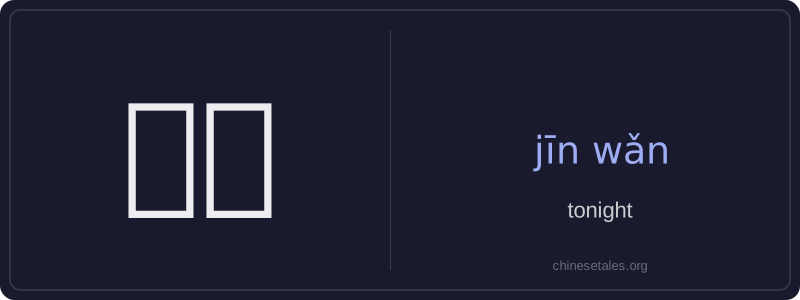
'Jīn wǎn' literally combines 'jīn' (meaning 'this' or 'current') and 'wǎn' (meaning 'evening' or 'night'). Together, they form a time noun meaning 'tonight' — the evening/night of the current day. It functions both as a noun (e.g., as the subject or object of a sentence) and as an adverb indicating when an action occurs.
This term is commonly used in daily conversation to refer to plans, events, or states happening after sunset today. It's neutral in register — appropriate in informal chats with friends and formal contexts like work emails or announcements. Unlike 'jīn tiān wǎnshàng' (this evening), 'jīn wǎn' is more concise and idiomatic for spoken and written Chinese. It never refers to the coming night beyond today — for that, use 'míng tiān wǎnshàng' (tomorrow evening).
Example Sentences
Related Words
我的
我的 (wǒ de) is a possessive pronoun meaning 'my'
这么
这么 (zhè me) is an adverb meaning 'so' or 'this
这边
这边 (zhè biān) literally combines 这 (zhè, 'th
中国
‘Zhōngguó’ literally means ‘Middle Kingdom’
中学
'Zhōngxué' literally combines 'zhōng' (middle)
一天
‘一天’ literally combines the numeral ‘一’ (y
一心
‘一心’ literally combines ‘one’ (一) and ‘hea
在家
'Zài jiā' literally combines the preposition 'z