Word Explanation
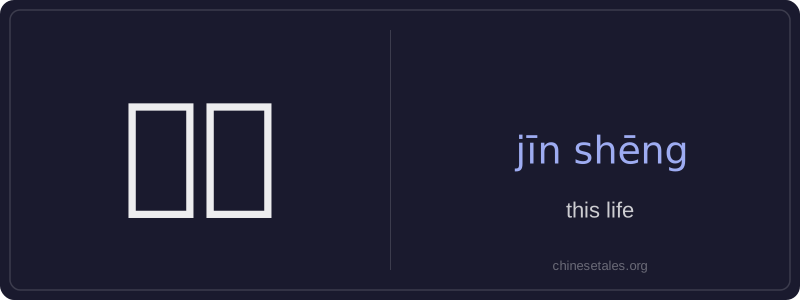
‘今生’ literally combines 今 (jīn, 'now' or 'this') and 生 (shēng, 'life' or 'birth'), meaning 'this life' — referring to one’s current lifetime as distinct from past or future lives. It carries a philosophical or spiritual connotation, often appearing in Buddhist-influenced contexts, poetry, or heartfelt expressions about fate, gratitude, or impermanence.
The term is commonly used in reflective, emotional, or solemn contexts — for instance, when expressing deep appreciation ('I’m grateful to have met you in this life'), acknowledging destiny ('We were destined to meet in this life'), or contemplating mortality ('What matters most in this life?'). Unlike the neutral '这一生' (zhè yī shēng), '今生' sounds more literary and imbued with sentiment or existential weight. It rarely appears in casual daily speech but is frequent in written language, songs, and formal or poetic discourse.
Example Sentences
Related Words
我的
我的 (wǒ de) is a possessive pronoun meaning 'my'
这么
这么 (zhè me) is an adverb meaning 'so' or 'this
这边
这边 (zhè biān) literally combines 这 (zhè, 'th
中国
‘Zhōngguó’ literally means ‘Middle Kingdom’
中学
'Zhōngxué' literally combines 'zhōng' (middle)
一天
‘一天’ literally combines the numeral ‘一’ (y
一心
‘一心’ literally combines ‘one’ (一) and ‘hea
在家
'Zài jiā' literally combines the preposition 'z