Word Explanation
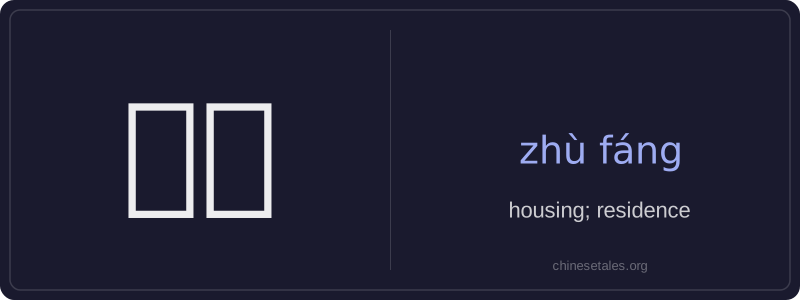
‘住房’ (zhù fáng) literally combines ‘住’ (to live, reside) and ‘房’ (room, house), meaning ‘housing’ or ‘residence’ in a general, formal sense. It refers to dwellings where people live — including apartments, houses, dormitories, or any habitable space — and is commonly used in official, administrative, or policy-related contexts, such as housing policy, rental agreements, or urban planning.
Unlike the more colloquial ‘房子’ (fángzi) or ‘住宅’ (zhùzhái), ‘住房’ emphasizes function (a place for living) rather than structure or ownership. It often appears in compound terms like ‘保障性住房’ (affordable housing) or ‘住房公积金’ (housing provident fund). While it can refer to both owned and rented dwellings, it rarely implies luxury or temporary lodging (e.g., hotels); those are covered by other terms like ‘宾馆’ or ‘临时住所’.
Example Sentences
Related Words
我的
我的 (wǒ de) is a possessive pronoun meaning 'my'
这么
这么 (zhè me) is an adverb meaning 'so' or 'this
这边
这边 (zhè biān) literally combines 这 (zhè, 'th
中国
‘Zhōngguó’ literally means ‘Middle Kingdom’
中学
'Zhōngxué' literally combines 'zhōng' (middle)
一天
‘一天’ literally combines the numeral ‘一’ (y
一心
‘一心’ literally combines ‘one’ (一) and ‘hea
在家
'Zài jiā' literally combines the preposition 'z