Word Explanation
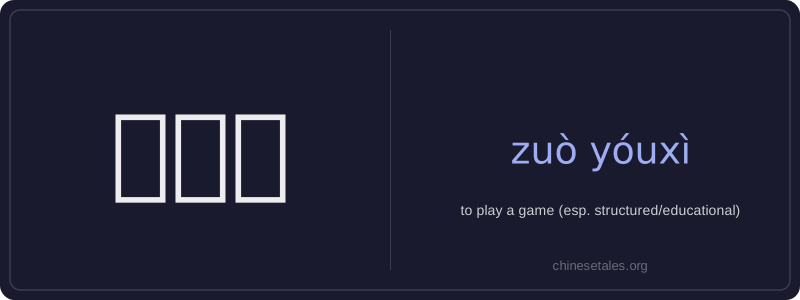
'做游戏' literally means 'to do/make a game', but in modern spoken Chinese it almost always means 'to play a game'—especially structured, interactive, or educational activities, such as those led by teachers in classrooms, used in language learning, or conducted in group settings like camps or therapy sessions. Unlike the more general '玩游戏' (wán yóuxì), which emphasizes leisure and entertainment, '做游戏' highlights purposeful engagement: following rules, collaborating, practicing skills, or achieving a learning objective.
The verb 做 (zuò) here carries its common sense of 'to carry out an activity with intention', while 游戏 (yóuxì) means 'game'. Together, they form a compound verb that implies active participation in a designed activity—not passive playing. It's frequently used in educational, developmental, or therapeutic contexts, especially with children, language learners, or team-building groups.
Example Sentences
Related Words
我的
我的 (wǒ de) is a possessive pronoun meaning 'my'
这么
这么 (zhè me) is an adverb meaning 'so' or 'this
这边
这边 (zhè biān) literally combines 这 (zhè, 'th
中国
‘Zhōngguó’ literally means ‘Middle Kingdom’
中学
'Zhōngxué' literally combines 'zhōng' (middle)
一天
‘一天’ literally combines the numeral ‘一’ (y
一心
‘一心’ literally combines ‘one’ (一) and ‘hea
在家
'Zài jiā' literally combines the preposition 'z