Word Explanation
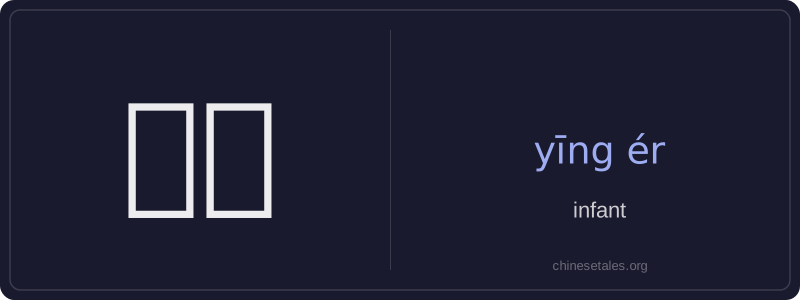
婴儿 (yīng ér) means 'infant'—a very young child, typically under one year old. The character 婴 (yīng) originally depicted a baby wrapped in swaddling clothes and carries the core meaning of 'infancy' or 'newborn'; 儿 (ér) means 'child' and functions here as a noun suffix that softens and specifies the meaning, forming a compound noun. Together, they emphasize the earliest stage of human childhood, distinct from 幼儿 (yòu ér, 'toddler') or 孩子 (hái zi, 'child' more generally).
This term is used in medical, developmental, and caregiving contexts—such as pediatric care, parenting guides, or public health announcements. It’s neutral and formal, commonly appearing in official documents, hospitals, and baby product labeling. Unlike colloquial terms like 小宝宝 (xiǎo bǎo bǎo), 婴儿 carries no diminutive or affectionate connotation; it’s precise, clinical, and respectful.
Example Sentences
Related Words
我的
我的 (wǒ de) is a possessive pronoun meaning 'my'
这么
这么 (zhè me) is an adverb meaning 'so' or 'this
这边
这边 (zhè biān) literally combines 这 (zhè, 'th
中国
‘Zhōngguó’ literally means ‘Middle Kingdom’
中学
'Zhōngxué' literally combines 'zhōng' (middle)
一天
‘一天’ literally combines the numeral ‘一’ (y
一心
‘一心’ literally combines ‘one’ (一) and ‘hea
在家
'Zài jiā' literally combines the preposition 'z