Word Explanation
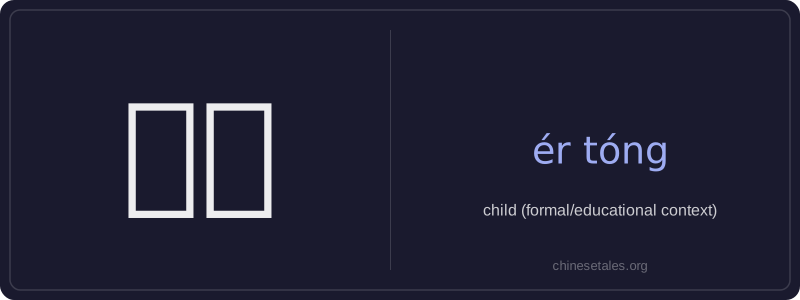
儿童 (ér tóng) is a formal, written-term noun meaning 'child'—typically used in educational, legal, medical, or policy contexts (e.g., 'child protection', 'children's literature'). It combines 儿 (ér), an ancient character meaning 'son' or 'child', and 童 (tóng), which means 'youth', 'immature person', or 'servant' in classical usage; together, they reinforce the idea of a young, pre-adult human being. Unlike colloquial terms like 小孩 (xiǎo hái) or 孩子 (hái zi), 儿童 carries neutral-to-official register and often appears in compound nouns such as 儿童节 (Children’s Day) or 儿童医院 (Children’s Hospital).
This term generally refers to individuals from infancy up to age 14 or 18, depending on context—often aligned with China’s legal definition of a child (under 14 for criminal responsibility, under 18 for full civil capacity). It is rarely used in casual speech or direct address; you wouldn’t say '你好,儿童!' to greet a child. Instead, it functions best in descriptive, institutional, or third-person reference.
Example Sentences
Related Words
我的
我的 (wǒ de) is a possessive pronoun meaning 'my'
这么
这么 (zhè me) is an adverb meaning 'so' or 'this
这边
这边 (zhè biān) literally combines 这 (zhè, 'th
中国
‘Zhōngguó’ literally means ‘Middle Kingdom’
中学
'Zhōngxué' literally combines 'zhōng' (middle)
一天
‘一天’ literally combines the numeral ‘一’ (y
一心
‘一心’ literally combines ‘one’ (一) and ‘hea
在家
'Zài jiā' literally combines the preposition 'z