Word Explanation
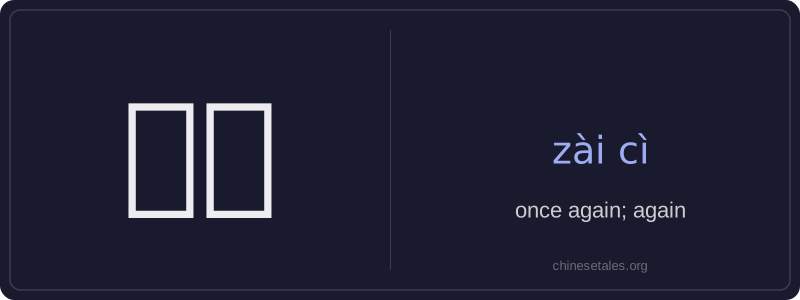
再次 is an adverb meaning 'once again' or 'again', used to indicate that an action or event is being repeated. The character 再 (zài) means 'again' or 'anew', often implying repetition after a previous occurrence, while 次 (cì) means 'time' or 'occasion'—together, they literally mean 'a second (or additional) time'. Unlike the simpler word 又 (yòu), which can imply repetition with a sense of inevitability or even annoyance, 再次 is neutral and formal, commonly used in writing, announcements, and polite speech.
This word typically appears before a verb (e.g., 再次尝试, 再次强调) and never at the end of a sentence. It’s frequently found in contexts like apologies ('再次道歉'), instructions ('请再次检查'), or news reports describing recurring events. It does not carry emotional connotations by itself, making it suitable for professional, academic, or official communication where clarity and neutrality are valued.
Example Sentences
Related Words
我的
我的 (wǒ de) is a possessive pronoun meaning 'my'
这么
这么 (zhè me) is an adverb meaning 'so' or 'this
这边
这边 (zhè biān) literally combines 这 (zhè, 'th
中国
‘Zhōngguó’ literally means ‘Middle Kingdom’
中学
'Zhōngxué' literally combines 'zhōng' (middle)
一天
‘一天’ literally combines the numeral ‘一’ (y
一心
‘一心’ literally combines ‘one’ (一) and ‘hea
在家
'Zài jiā' literally combines the preposition 'z