Word Explanation
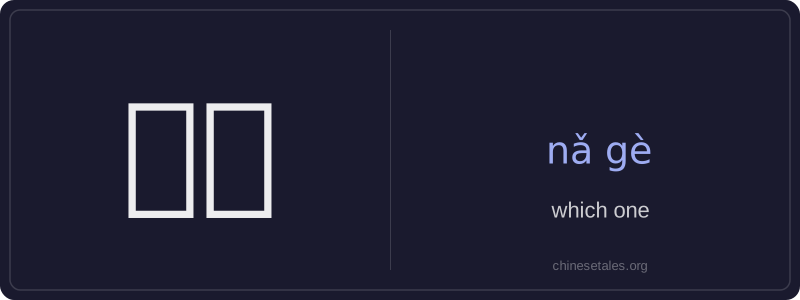
哪个 (nǎ gè) is a demonstrative pronoun meaning 'which one' and is used to ask for selection among two or more specific, countable items. It combines the interrogative 哪 (nǎ), meaning 'which', with the common measure word 个 (gè), which functions here as a generic classifier for people, objects, or concepts — similar to 'one' in English questions like 'Which one?'. Unlike 什么 (shénme, 'what'), 哪个 implies a limited, known set of options.
This word is frequently used in everyday spoken and written Chinese, especially when choosing from visible or previously mentioned items — for example, pointing to books on a shelf, selecting food at a restaurant, or identifying people in a group. It can stand alone as a subject or object, and often appears before a noun (e.g., 哪个苹果) when specifying the category. Tone is essential: nǎ (third tone) must not be mispronounced as nà (fourth tone, meaning 'that').
Example Sentences
Related Words
我的
我的 (wǒ de) is a possessive pronoun meaning 'my'
这么
这么 (zhè me) is an adverb meaning 'so' or 'this
这边
这边 (zhè biān) literally combines 这 (zhè, 'th
中国
‘Zhōngguó’ literally means ‘Middle Kingdom’
中学
'Zhōngxué' literally combines 'zhōng' (middle)
见面
见面 literally means 'see face' — combining 见 (t
后来
Later (hòulái) is an adverb meaning 'afterwards'
背后
背后 literally means 'back + behind' and functions