Word Explanation
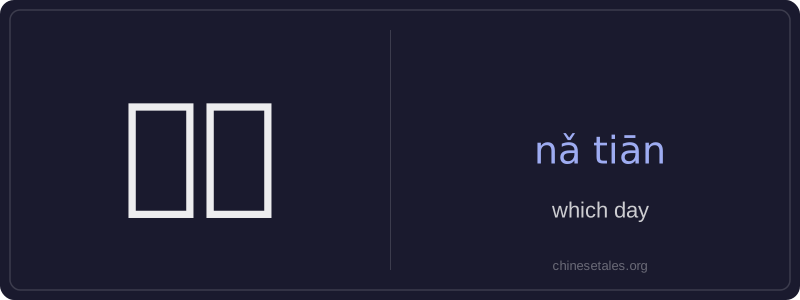
哪天 (nǎ tiān) is an interrogative pronoun meaning 'which day' — used to ask about a specific, unspecified day in the past or future. It combines 哪 (nǎ), a question word meaning 'which', and 天 (tiān), meaning 'day'. Unlike 今天 (today), 明天 (tomorrow), or 某天 (some day), 哪天 carries an expectation that the listener can identify or recall the particular day being asked about — often implying shared context or prior discussion.
This term is commonly used in casual spoken Chinese and appears frequently in questions about scheduling, memories, or hypothetical plans. It does not refer to calendar dates (e.g., March 15) unless context makes that clear; rather, it points to a day within a relative timeframe — such as 'the day we met', 'that rainy day last week', or 'a day you’re free next month'. It’s neutral in register and appropriate in both informal conversations and polite inquiries, though it rarely appears in formal writing where more precise phrasing is preferred.
Example Sentences
Related Words
我的
我的 (wǒ de) is a possessive pronoun meaning 'my'
这么
这么 (zhè me) is an adverb meaning 'so' or 'this
这边
这边 (zhè biān) literally combines 这 (zhè, 'th
中国
‘Zhōngguó’ literally means ‘Middle Kingdom’
中学
'Zhōngxué' literally combines 'zhōng' (middle)
见面
见面 literally means 'see face' — combining 见 (t
后来
Later (hòulái) is an adverb meaning 'afterwards'
背后
背后 literally means 'back + behind' and functions