Word Explanation
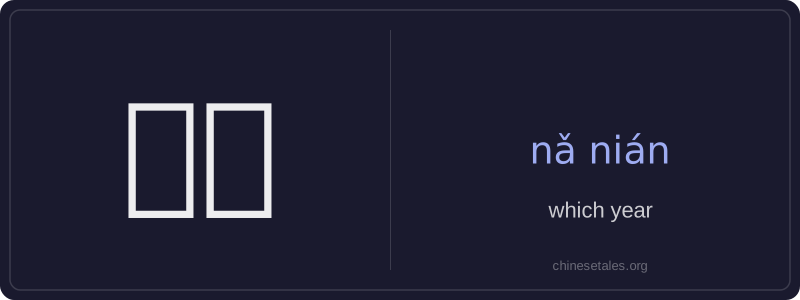
哪年 is an interrogative phrase meaning 'which year' and functions as a pronoun asking for specification among years. It combines the interrogative character 哪 (nǎ), meaning 'which', with 年 (nián), meaning 'year'. Unlike standalone time words like 今年 or 明年, 哪年 does not refer to any specific year—it only appears in questions seeking temporal identification.
This phrase is commonly used in both spoken and written Chinese when asking about the year an event occurred, a person was born, a policy was enacted, or a historical milestone took place. It often appears with verbs like 是, 有, or 发生, and may be followed by question particles like 吗 or 啊, though these are optional. While grammatically simple, learners should note that 哪年 never stands alone as a subject without context—it always requires a verb or predicate to complete the question.
Example Sentences
Related Words
我的
我的 (wǒ de) is a possessive pronoun meaning 'my'
这么
这么 (zhè me) is an adverb meaning 'so' or 'this
这边
这边 (zhè biān) literally combines 这 (zhè, 'th
中国
‘Zhōngguó’ literally means ‘Middle Kingdom’
中学
'Zhōngxué' literally combines 'zhōng' (middle)
见面
见面 literally means 'see face' — combining 见 (t
后来
Later (hòulái) is an adverb meaning 'afterwards'
背后
背后 literally means 'back + behind' and functions