Word Explanation
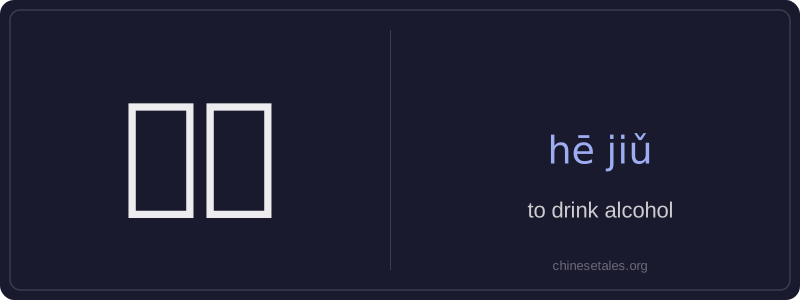
"Hē jiǔ" literally combines 喝 (hē), meaning "to drink", and 酒 (jiǔ), meaning "alcohol" or "wine". Together, they form a common verb phrase meaning "to drink alcohol" — not just any beverage, but specifically alcoholic drinks like beer, wine, or baijiu. It is used in both casual and formal contexts, though often carries cultural weight in China, where drinking alcohol is tied to social bonding, business dinners, and holiday celebrations.
The phrase functions as a single verbal unit and typically appears after the subject and before objects or complements (e.g., 喝酒多了 means "drink too much alcohol"). While it can refer to moderate consumption, it may also imply habitual or excessive drinking depending on context and modifiers. Unlike generic terms for drinking (e.g., 喝水), 喝酒 always signals intentionality and cultural significance — never used for non-alcoholic drinks.
Example Sentences
Related Words
我的
我的 (wǒ de) is a possessive pronoun meaning 'my'
这么
这么 (zhè me) is an adverb meaning 'so' or 'this
这边
这边 (zhè biān) literally combines 这 (zhè, 'th
中国
‘Zhōngguó’ literally means ‘Middle Kingdom’
中学
'Zhōngxué' literally combines 'zhōng' (middle)
见面
见面 literally means 'see face' — combining 见 (t
后来
Later (hòulái) is an adverb meaning 'afterwards'
背后
背后 literally means 'back + behind' and functions