Word Explanation
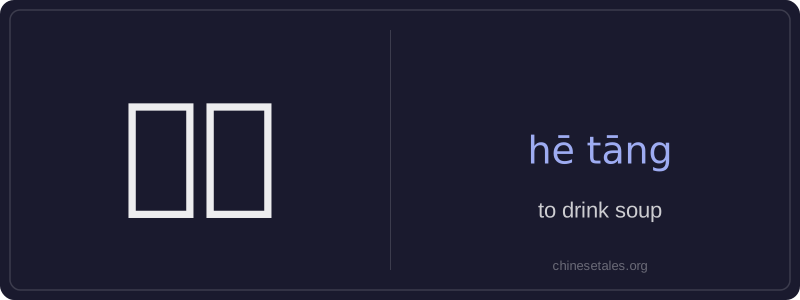
‘喝汤’ is a verb meaning 'to drink soup' — literally combining 喝 (hē), which means 'to drink', and 汤 (tāng), meaning 'soup'. Unlike English, where 'soup' is often eaten with a spoon, in Chinese-speaking cultures, many soups are sipped directly from a bowl or cup, especially clear broths or light soups served hot. The phrase emphasizes the act of consuming liquid soup, not eating solid food with broth.
This expression is commonly used in daily life — at home, in restaurants, or when discussing meals and health. It frequently appears in contexts related to nutrition, traditional remedies (e.g., herbal soups for wellness), or family routines like having soup before or after a main dish. While some thicker soups may be eaten with chopsticks or a spoon, ‘喝汤’ still applies if the primary action is sipping the liquid portion. It’s a neutral, standard term used across all registers — formal and informal alike.
Example Sentences
Related Words
我的
我的 (wǒ de) is a possessive pronoun meaning 'my'
这么
这么 (zhè me) is an adverb meaning 'so' or 'this
这边
这边 (zhè biān) literally combines 这 (zhè, 'th
中国
‘Zhōngguó’ literally means ‘Middle Kingdom’
中学
'Zhōngxué' literally combines 'zhōng' (middle)
见面
见面 literally means 'see face' — combining 见 (t
后来
Later (hòulái) is an adverb meaning 'afterwards'
背后
背后 literally means 'back + behind' and functions