Word Explanation
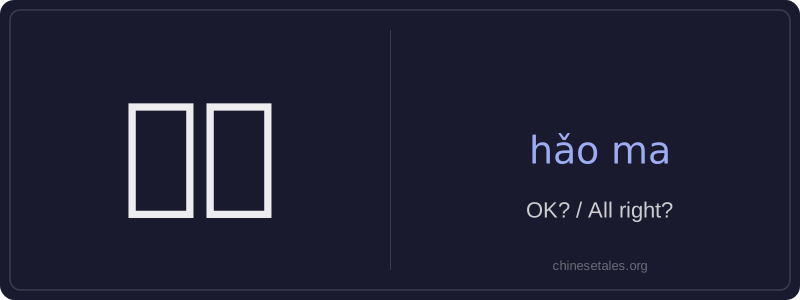
好吗 is a common interrogative particle phrase used to seek agreement, confirmation, or permission in everyday spoken Chinese. It literally combines 好 (hǎo, 'good' or 'okay') and 吗 (ma, a neutral question particle), forming a soft, polite way to ask 'Is that okay?' or 'Does that work?' — not a literal inquiry about goodness, but a pragmatic device for checking mutual understanding or consent.
This phrase frequently appears at the end of suggestions, proposals, or requests, especially in casual and friendly interactions. It signals openness to negotiation and reflects Chinese conversational norms that value harmony and indirectness. While it can appear in written dialogue (e.g., texts or emails), it’s predominantly oral and rarely used in formal writing or official contexts. Its tone is gentle and cooperative, making it ideal for coordinating plans, offering help, or confirming arrangements with peers, family, or colleagues.
Example Sentences
Related Words
我的
我的 (wǒ de) is a possessive pronoun meaning 'my'
这么
这么 (zhè me) is an adverb meaning 'so' or 'this
这边
这边 (zhè biān) literally combines 这 (zhè, 'th
中国
‘Zhōngguó’ literally means ‘Middle Kingdom’
中学
'Zhōngxué' literally combines 'zhōng' (middle)
见面
见面 literally means 'see face' — combining 见 (t
后来
Later (hòulái) is an adverb meaning 'afterwards'
背后
背后 literally means 'back + behind' and functions