Word Explanation
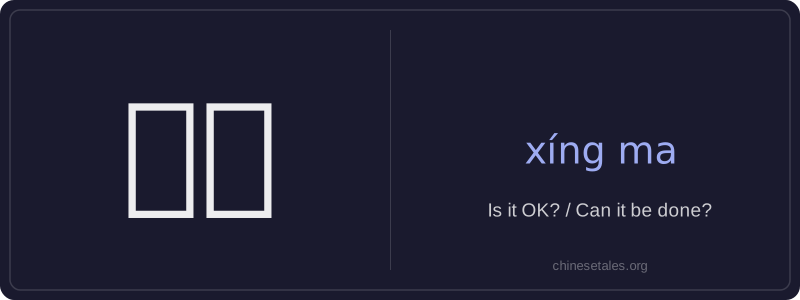
'行吗' (xíng ma) is a common, versatile phrase used to ask whether something is acceptable, feasible, or permissible. Literally, 行 means 'to work', 'to be OK', or 'to be possible', and 吗 is a question particle that turns a statement into a yes/no question. Together, they form a soft, polite way to seek confirmation or approval — similar to 'Is it OK?', 'Can we do this?', or 'Would that work?' in English. It’s frequently used in daily interactions: confirming plans, checking availability, requesting permission, or testing suggestions.
This phrase carries a neutral-to-polite register and is appropriate in both casual and semi-formal contexts — with friends, colleagues, or service staff — though it may sound slightly tentative or deferential depending on tone and context. Unlike more formal alternatives like '可以吗?', '行吗' feels conversational and flexible, often implying shared understanding or prior context. It rarely stands alone as a full sentence but typically follows an implied or stated action, making it highly context-dependent and very common in spoken Chinese.
Example Sentences
Related Words
我的
我的 (wǒ de) is a possessive pronoun meaning 'my'
这么
这么 (zhè me) is an adverb meaning 'so' or 'this
这边
这边 (zhè biān) literally combines 这 (zhè, 'th
中国
‘Zhōngguó’ literally means ‘Middle Kingdom’
中学
'Zhōngxué' literally combines 'zhōng' (middle)
见面
见面 literally means 'see face' — combining 见 (t
后来
Later (hòulái) is an adverb meaning 'afterwards'
背后
背后 literally means 'back + behind' and functions