Word Explanation
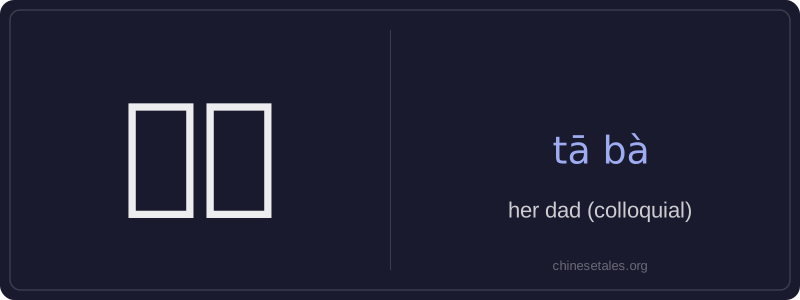
'Tā bà' is a colloquial, informal noun meaning 'her dad' — literally combining the third-person singular pronoun 她 (tā, 'she') and 爸 (bà, 'dad' or 'father'). Unlike formal terms like 她的父亲 (tā de fùqīn), this compound drops the possessive particle 的 and relies on context to signal possession, making it common in spoken Mandarin among friends, family, or casual writing like text messages.
It reflects a broader pattern in Chinese where kinship terms combine directly with pronouns (e.g., 我妈 wǒ mā, 他哥 tā gē) for brevity and intimacy. While grammatically simple, it’s rarely used in formal reports, official documents, or respectful address — reserving those contexts for full forms with 的 or honorifics like 令尊 (lìngzūn). The tone is warm, familiar, and slightly affectionate or teasing depending on context.
Example Sentences
Related Words
我的
我的 (wǒ de) is a possessive pronoun meaning 'my'
这么
这么 (zhè me) is an adverb meaning 'so' or 'this
这边
这边 (zhè biān) literally combines 这 (zhè, 'th
中国
‘Zhōngguó’ literally means ‘Middle Kingdom’
中学
'Zhōngxué' literally combines 'zhōng' (middle)
见面
见面 literally means 'see face' — combining 见 (t
后来
Later (hòulái) is an adverb meaning 'afterwards'
背后
背后 literally means 'back + behind' and functions