Word Explanation
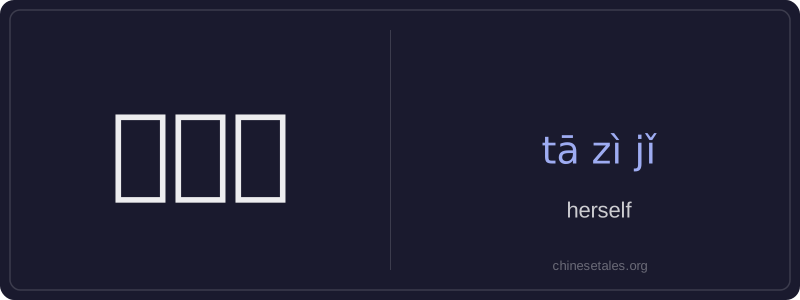
'Tā zìjǐ' literally combines 'tā' (she/her), 'zì' (self), and 'jǐ' (oneself), forming an emphatic reflexive pronoun meaning 'herself'. Unlike English, Chinese doesn’t change verb forms for reflexivity — instead, it adds 'zìjǐ' after the pronoun to indicate that the subject is both the doer and the receiver of the action. It emphasizes autonomy, agency, or contrast with others: e.g., 'She did it herself' stresses independence, while 'She hurt herself' marks the reflexive object.
This phrase is used only with third-person singular feminine subjects. It cannot be used for masculine or neutral referents (those require 'tā zìjǐ' with context or clarification, or more commonly 'tā zìjǐ' remains ambiguous unless gender is clear from context). It’s common in spoken and written Mandarin across registers, but never shortened — 'zìjǐ' alone means 'oneself' and lacks gender specification.
Example Sentences
Related Words
我的
我的 (wǒ de) is a possessive pronoun meaning 'my'
这么
这么 (zhè me) is an adverb meaning 'so' or 'this
这边
这边 (zhè biān) literally combines 这 (zhè, 'th
中国
‘Zhōngguó’ literally means ‘Middle Kingdom’
中学
'Zhōngxué' literally combines 'zhōng' (middle)
见面
见面 literally means 'see face' — combining 见 (t
后来
Later (hòulái) is an adverb meaning 'afterwards'
背后
背后 literally means 'back + behind' and functions