Word Explanation
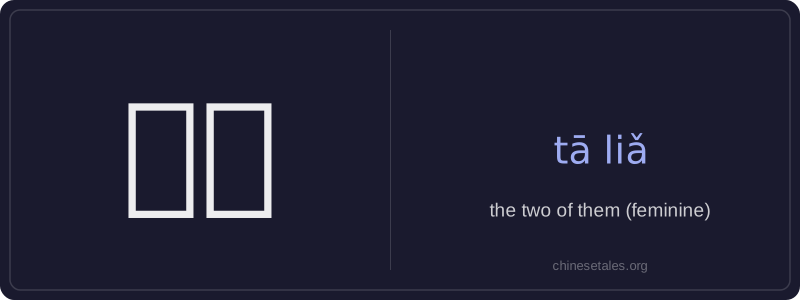
‘她俩’ is a colloquial pronoun meaning ‘the two of them’ when referring specifically to two females. It combines the third-person singular feminine pronoun 她 (tā, ‘she’) with the numeral classifier 俩 (liǎ), which means ‘two (people)’ and is used only with pronouns or nouns denoting people — never with objects or animals. Unlike formal constructions like ‘她们两个’ (tāmen liǎng gè), ‘她俩’ is concise, warm, and commonly heard in spoken Chinese among friends, family, or colleagues.
This term implies familiarity and closeness; it’s rarely used in official documents or formal speeches. The classifier 俩 cannot stand alone as a number — it always attaches directly to a pronoun or noun (e.g., 我俩 wǒ liǎ, 咱俩 zán liǎ). Because it inherently specifies exactly two people and their gender, no additional quantifiers or gender markers are needed — making it both efficient and contextually precise in everyday conversation.
Example Sentences
Related Words
我的
我的 (wǒ de) is a possessive pronoun meaning 'my'
这么
这么 (zhè me) is an adverb meaning 'so' or 'this
这边
这边 (zhè biān) literally combines 这 (zhè, 'th
中国
‘Zhōngguó’ literally means ‘Middle Kingdom’
中学
'Zhōngxué' literally combines 'zhōng' (middle)
见面
见面 literally means 'see face' — combining 见 (t
后来
Later (hòulái) is an adverb meaning 'afterwards'
背后
背后 literally means 'back + behind' and functions