Word Explanation
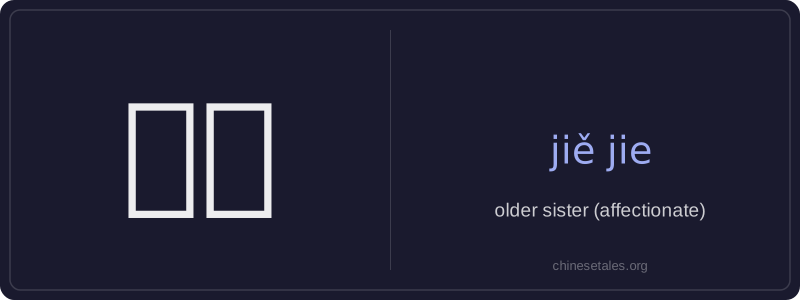
‘Jiějie’ (姐姐) literally combines two identical characters 姐, each meaning ‘older sister’. In Chinese kinship terms, reduplication like this signals familiarity, affection, and closeness—making it warmer and more informal than the plain form 姐 (jiě). It’s used by younger siblings to address their elder sisters, and sometimes by children or young adults to respectfully or endearingly refer to slightly older female peers or relatives, even if not biologically related.
This term reflects Chinese cultural emphasis on age hierarchy and familial warmth. Unlike English ‘sister’, which doesn’t distinguish age without modifiers, ‘jiějie’ inherently specifies seniority and carries a tone of tenderness or deference. It’s common in daily conversation, family settings, and media (e.g., cartoons or dramas), but rarely appears in formal documents or academic contexts. The second syllable is always unstressed and pronounced lightly as ‘jie’ (not ‘jiě’), a key phonological feature.
Example Sentences
Related Words
我的
我的 (wǒ de) is a possessive pronoun meaning 'my'
这么
这么 (zhè me) is an adverb meaning 'so' or 'this
中学
'Zhōngxué' literally combines 'zhōng' (middle)
这边
这边 (zhè biān) literally combines 这 (zhè, 'th
中国
‘Zhōngguó’ literally means ‘Middle Kingdom’
见面
见面 literally means 'see face' — combining 见 (t
后来
Later (hòulái) is an adverb meaning 'afterwards'
背后
背后 literally means 'back + behind' and functions