Word Explanation
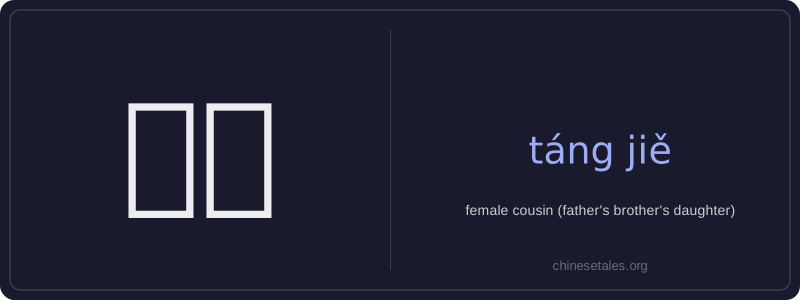
‘Táng jiě’ refers specifically to a paternal cousin who is female and older than the speaker — that is, the daughter of one’s father’s brother. The character ‘táng’ (堂) denotes relatives connected through the father’s side and sharing the same ancestral lineage or clan hall, distinguishing these kin from maternal relatives (who use ‘biǎo’ instead). ‘Jiě’ (姐) means ‘older sister’, indicating both gender and relative age: the cousin must be older than the speaker.
This term is used in formal family introductions, genealogical contexts, and everyday conversation when specifying exact familial relationships. It reflects Chinese kinship’s precision — unlike English ‘cousin’, which is gender- and age-neutral, ‘táng jiě’ encodes generation, lineage, gender, and seniority. It is common in family gatherings, wedding invitations, or when explaining family trees to non-native speakers. While ‘táng’ can appear in other kinship terms (e.g., ‘táng gē’ for paternal male cousin), ‘táng jiě’ is exclusively for an older paternal female cousin.
Example Sentences
Related Words
我的
我的 (wǒ de) is a possessive pronoun meaning 'my'
这么
这么 (zhè me) is an adverb meaning 'so' or 'this
中学
'Zhōngxué' literally combines 'zhōng' (middle)
这边
这边 (zhè biān) literally combines 这 (zhè, 'th
中国
‘Zhōngguó’ literally means ‘Middle Kingdom’
见面
见面 literally means 'see face' — combining 见 (t
后来
Later (hòulái) is an adverb meaning 'afterwards'
背后
背后 literally means 'back + behind' and functions