Word Explanation
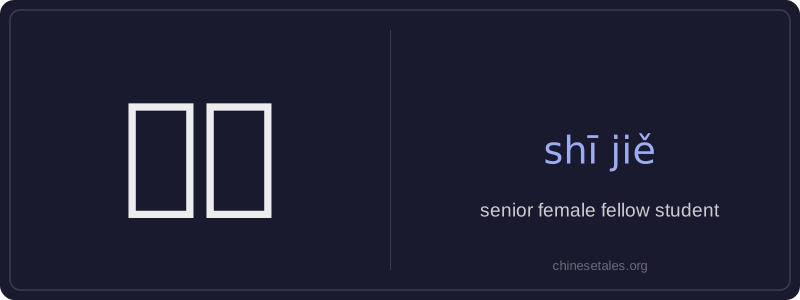
'Shī jiě' literally combines 师 (shī, 'teacher' or 'master') and 姐 (jiě, 'older sister'), but it does not mean 'teacher-sister'. Instead, it refers to a senior female fellow student — someone who entered the same school, department, research lab, or apprenticeship program before you and is female. The term reflects Chinese academic and mentorship culture, where seniority and respectful hierarchy matter deeply, even among peers.
It's commonly used in universities, traditional arts (like martial arts or calligraphy), and professional training settings. Unlike formal titles like 'professor', 'shī jiě' conveys warmth and familiarity while maintaining respect. It’s never used for male seniors (who are called 师兄 shī xiōng) or for teachers (who are 师父 shī fu or 老师 lǎo shī). The relationship implies informal guidance, shared experience, and mutual recognition of seniority based on enrollment or initiation order.
Example Sentences
Related Words
我的
我的 (wǒ de) is a possessive pronoun meaning 'my'
这么
这么 (zhè me) is an adverb meaning 'so' or 'this
中学
'Zhōngxué' literally combines 'zhōng' (middle)
这边
这边 (zhè biān) literally combines 这 (zhè, 'th
中国
‘Zhōngguó’ literally means ‘Middle Kingdom’
见面
见面 literally means 'see face' — combining 见 (t
后来
Later (hòulái) is an adverb meaning 'afterwards'
背后
背后 literally means 'back + behind' and functions