Word Explanation
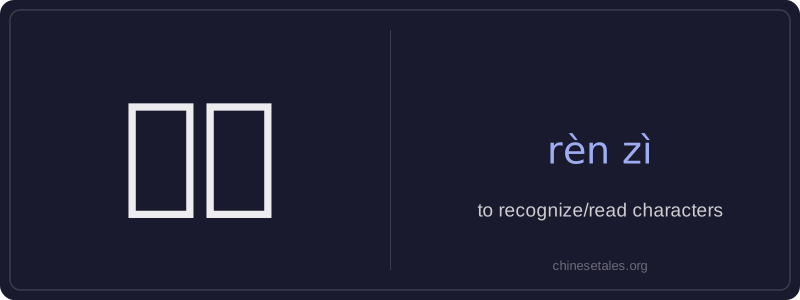
‘认字’ literally means ‘to recognize characters’ and refers to the ability to identify and read Chinese written characters. The verb 认 (rèn) means ‘to recognize’ or ‘to identify’, while 字 (zì) means ‘character’ or ‘written symbol’. Together, they describe the foundational literacy skill of reading Chinese script — especially in early education or for learners acquiring the language.
This term is commonly used when discussing children’s learning progress, adult literacy programs, or self-study efforts. It emphasizes visual recognition rather than writing or pronunciation alone; someone who can ‘认字’ may not yet be able to write those characters fluently or know all their readings in context. It’s often contrasted with ‘写字’ (to write characters) or ‘识字’ (a near-synonym also meaning ‘to recognize characters’, though slightly more formal or literary).
Example Sentences
Related Words
见面
见面 literally means 'see face' — combining 见 (t
后来
Later (hòulái) is an adverb meaning 'afterwards'
背后
背后 literally means 'back + behind' and functions
我的
我的 (wǒ de) is a possessive pronoun meaning 'my'
这么
这么 (zhè me) is an adverb meaning 'so' or 'this
中学
'Zhōngxué' literally combines 'zhōng' (middle)
前面
前面 (qián miàn) literally combines 前 (qián, '
面条
‘面条’ (miàn tiáo) literally means ‘flour str