Word Explanation
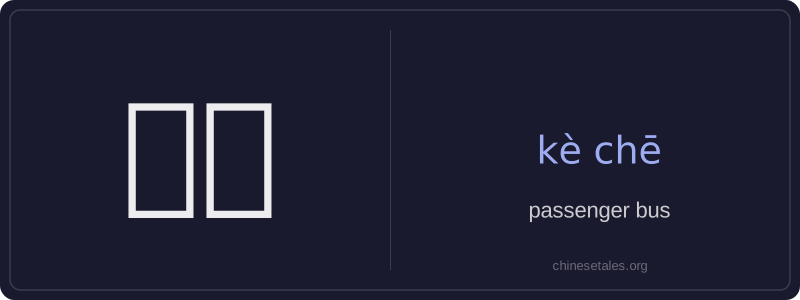
客车 (kè chē) literally means 'guest vehicle' — 客 (kè) means 'guest' or 'passenger', and 车 (chē) means 'vehicle' or 'car'. Together, they refer specifically to a motor vehicle designed to carry passengers, especially in public or commercial transport contexts — such as city buses, intercity coaches, or airport shuttles. Unlike 私家车 (sījiāchē, 'private car') or 出租车 (chūzūchē, 'taxi'), 客车 emphasizes scheduled, group-based passenger transport.
This term is commonly used in official signage, transportation schedules, news reports, and daily conversation when referring to non-rail public transport. It does not include trains, subways, or airplanes — those have separate terms (e.g., 火车, 地铁, 飞机). In mainland China, 客车 also appears in vehicle classification systems: for example, license plates for passenger buses begin with the character 客. The word is neutral in register and appropriate in both formal and informal settings.
Example Sentences
Related Words
见面
见面 literally means 'see face' — combining 见 (t
后来
Later (hòulái) is an adverb meaning 'afterwards'
背后
背后 literally means 'back + behind' and functions
我的
我的 (wǒ de) is a possessive pronoun meaning 'my'
这么
这么 (zhè me) is an adverb meaning 'so' or 'this
中学
'Zhōngxué' literally combines 'zhōng' (middle)
前面
前面 (qián miàn) literally combines 前 (qián, '
面条
‘面条’ (miàn tiáo) literally means ‘flour str