Word Explanation
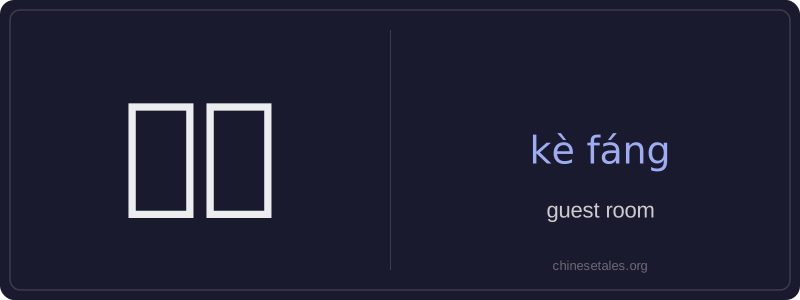
客房 literally means 'guest room' — 客 (kè) means 'guest' or 'visitor', and 房 (fáng) means 'room' or 'house'. Together, they refer specifically to a room provided for guests to stay in, most commonly in hotels, guesthouses, or private homes. Unlike the general term 房间 (fángjiān), which just means 'room', 客房 carries an implied function: it is designated for temporary occupancy by visitors, not for permanent residence or other purposes like storage or work.
This word is standard in hospitality contexts — you’ll see it on hotel signs, reservation websites, and staff announcements. It’s neutral in register (neither formal nor casual) and widely understood across all Chinese-speaking regions. While 客房 can occasionally be used metaphorically (e.g., 'a room open to new ideas'), its overwhelming usage is literal and practical, tied to accommodation services.
Example Sentences
Related Words
见面
见面 literally means 'see face' — combining 见 (t
后来
Later (hòulái) is an adverb meaning 'afterwards'
背后
背后 literally means 'back + behind' and functions
我的
我的 (wǒ de) is a possessive pronoun meaning 'my'
这么
这么 (zhè me) is an adverb meaning 'so' or 'this
中学
'Zhōngxué' literally combines 'zhōng' (middle)
前面
前面 (qián miàn) literally combines 前 (qián, '
面条
‘面条’ (miàn tiáo) literally means ‘flour str