Word Explanation
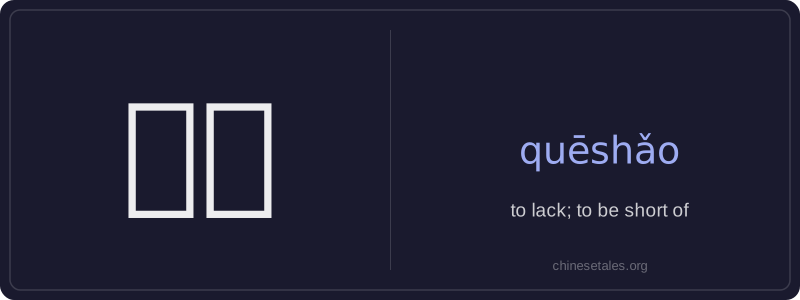
缺少 is a verb meaning 'to lack' or 'to be short of' something necessary or expected. It combines 缺 (quē), which means 'to be missing' or 'deficient', and 少 (shǎo), meaning 'few' or 'little'. Together, they emphasize an insufficiency — not just absence, but an inadequate quantity or presence of something required. The word is commonly used in formal and everyday contexts, especially when describing shortages of resources, qualities, people, or essential elements.
缺少 typically takes a noun object directly (e.g., 缺少经验, 缺少水), and it does not take aspect markers like 了 or 过 unless part of a larger verbal construction. It carries a neutral-to-slightly-negative tone, suggesting a gap that needs addressing. Unlike the more colloquial 没有, 缺少 focuses specifically on insufficiency rather than simple nonexistence, and it’s often found in written reports, health advisories, educational materials, and logistical discussions.
Example Sentences
Related Words
见面
见面 literally means 'see face' — combining 见 (t
后来
Later (hòulái) is an adverb meaning 'afterwards'
背后
背后 literally means 'back + behind' and functions
我的
我的 (wǒ de) is a possessive pronoun meaning 'my'
这么
这么 (zhè me) is an adverb meaning 'so' or 'this
中学
'Zhōngxué' literally combines 'zhōng' (middle)
前面
前面 (qián miàn) literally combines 前 (qián, '
面条
‘面条’ (miàn tiáo) literally means ‘flour str