Word Explanation
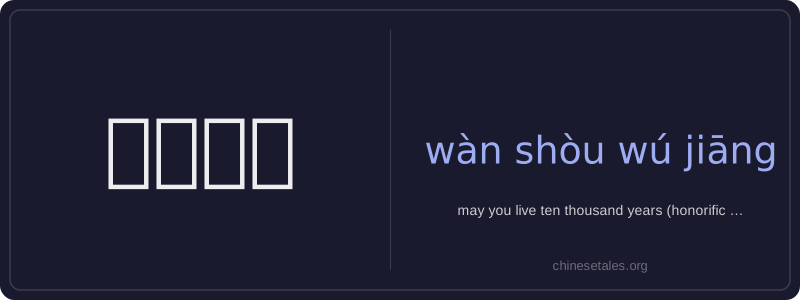
'Wàn shòu wú jiāng' is a formal, highly honorific blessing meaning 'may you live ten thousand years' — expressing profound wishes for longevity, health, and enduring vitality. Literally, 万 (wàn) means 'ten thousand', 寿 (shòu) means 'life' or 'longevity', 无 (wú) means 'without', and 疆 (jiāng) means 'boundary' or 'limit'; together, they convey 'boundless longevity'. This phrase originates from classical Chinese poetry and imperial court language, where it was traditionally used to wish emperors eternal life.
Today, it’s rarely used in casual speech but appears in ceremonial contexts: birthday celebrations for elders, national holidays (especially historically tied to leaders), festive banners, and traditional art or calligraphy. It carries strong cultural weight and solemnity — using it lightly or ironically may seem inappropriate or even disrespectful. While the number 'ten thousand' is symbolic (not literal), it reflects the Chinese cultural emphasis on auspiciousness, harmony, and reverence for age and wisdom.
Example Sentences
Related Words
见面
见面 literally means 'see face' — combining 见 (t
后来
Later (hòulái) is an adverb meaning 'afterwards'
背后
背后 literally means 'back + behind' and functions
我的
我的 (wǒ de) is a possessive pronoun meaning 'my'
这么
这么 (zhè me) is an adverb meaning 'so' or 'this
中学
'Zhōngxué' literally combines 'zhōng' (middle)
前面
前面 (qián miàn) literally combines 前 (qián, '
面条
‘面条’ (miàn tiáo) literally means ‘flour str