Word Explanation
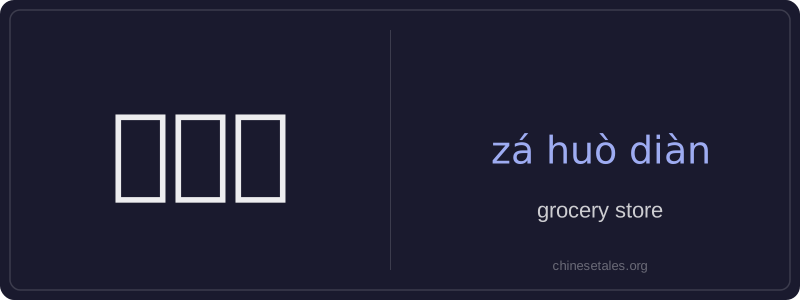
'杂货店' (zá huò diàn) literally breaks down as 'zá' (miscellaneous), 'huò' (goods, merchandise), and 'diàn' (shop or store). Together, it means a small, traditional retail shop that sells everyday household items—such as soap, rice, noodles, snacks, cleaning supplies, and basic stationery. Unlike modern supermarkets, 杂货店 are typically family-run, neighborhood-based businesses with limited inventory but strong local ties.
This term evokes a nostalgic, community-oriented setting common in older residential areas or smaller towns across China. While large chain supermarkets have become more widespread, many people still refer to small corner shops—even those selling mostly convenience items—as 杂货店, especially when emphasizing their variety of low-cost, practical goods. It’s a neutral, widely understood term used in both spoken and written Chinese, though it carries a slightly informal, warm connotation compared to formal terms like '超市' (chāo shì).
Example Sentences
Related Words
见面
见面 literally means 'see face' — combining 见 (t
后来
Later (hòulái) is an adverb meaning 'afterwards'
背后
背后 literally means 'back + behind' and functions
我的
我的 (wǒ de) is a possessive pronoun meaning 'my'
这么
这么 (zhè me) is an adverb meaning 'so' or 'this
中学
'Zhōngxué' literally combines 'zhōng' (middle)
前面
前面 (qián miàn) literally combines 前 (qián, '
面条
‘面条’ (miàn tiáo) literally means ‘flour str