Word Explanation
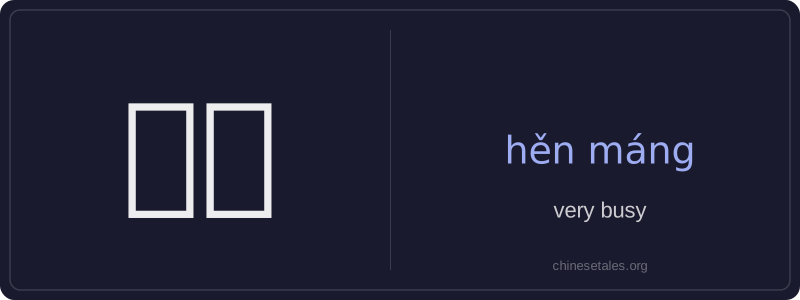
'很忙' (hěn máng) literally combines 'very' (很) and 'busy' (忙) to form a common adjective phrase meaning 'very busy'. Unlike English, Chinese doesn’t use degree adverbs like 'very' with all adjectives — but '很' is frequently used before '忙' to intensify the state of busyness, even though '忙' alone already implies significant activity. It describes a person’s current or habitual state of having many tasks, responsibilities, or time pressures.
This phrase is widely used in daily conversation — at work, school, or home — to politely explain unavailability or delayed responses. It carries a neutral-to-slightly-apologetic tone, often implying one is occupied but not overwhelmed. It’s typically used predicatively (after subject + 是/是…的 or directly after subject), not attributively before nouns (e.g., you wouldn’t say '很忙的人' without restructuring — instead, say '很忙的人' is acceptable but more naturally phrased as '一个很忙的人').
Example Sentences
Related Words
见面
见面 literally means 'see face' — combining 见 (t
后来
Later (hòulái) is an adverb meaning 'afterwards'
背后
背后 literally means 'back + behind' and functions
我的
我的 (wǒ de) is a possessive pronoun meaning 'my'
这么
这么 (zhè me) is an adverb meaning 'so' or 'this
中学
'Zhōngxué' literally combines 'zhōng' (middle)
前面
前面 (qián miàn) literally combines 前 (qián, '
面条
‘面条’ (miàn tiáo) literally means ‘flour str