Word Explanation
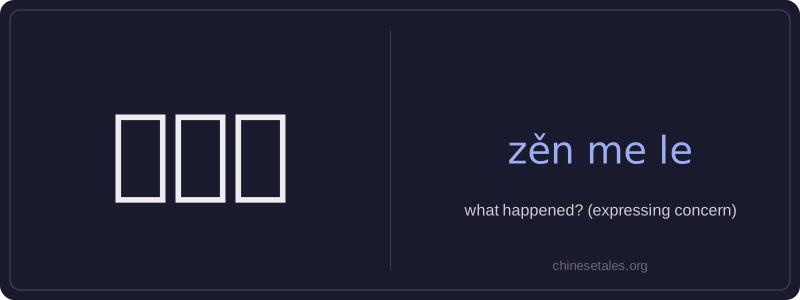
怎么了 is an interjection used to ask 'What happened?' or 'What's wrong?'—typically with concern, surprise, or empathy. It combines 怎 (how), 么 (a particle that forms interrogatives with words like 怎, 什, or 为), and 了 (a sentence-final particle indicating a change of state). Together, they express that something unexpected or troubling has occurred, prompting the speaker to seek clarification or offer help.
This phrase is informal and conversational, commonly used in spoken Chinese among friends, family, or colleagues. It often follows a visible cue—like someone looking upset, crying, or acting unusually—or appears after silence or hesitation. While it literally asks 'How did it become?', its pragmatic function is to signal care and invite explanation, not to request a literal description of 'how' something changed.
Example Sentences
Related Words
见面
见面 literally means 'see face' — combining 见 (t
后来
Later (hòulái) is an adverb meaning 'afterwards'
背后
背后 literally means 'back + behind' and functions
我的
我的 (wǒ de) is a possessive pronoun meaning 'my'
这么
这么 (zhè me) is an adverb meaning 'so' or 'this
中学
'Zhōngxué' literally combines 'zhōng' (middle)
前面
前面 (qián miàn) literally combines 前 (qián, '
面条
‘面条’ (miàn tiáo) literally means ‘flour str