Word Explanation
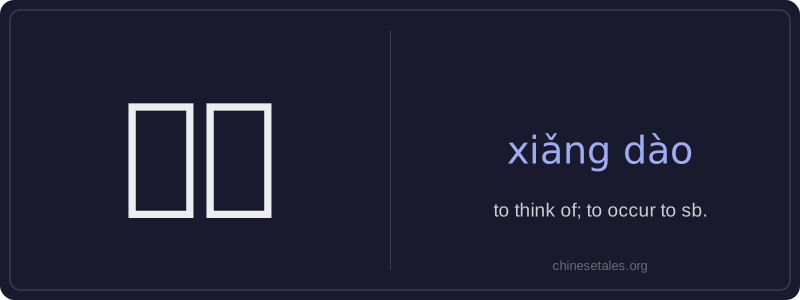
想到 (xiǎng dào) is a separable verb meaning 'to think of' or 'to occur to someone'. It combines 想 (xiǎng), meaning 'to think' or 'to consider', and 到 (dào), a resultative complement indicating successful mental arrival at an idea, memory, or realization. Unlike the simple verb 想, which can mean 'to want' or 'to think' generally, 想到 specifically signals that something has entered one’s mind — often unexpectedly or after reflection. It frequently appears in past-tense contexts with aspect particles like 了 or 过, and commonly follows subjects expressing people or their mental states.
This verb is widely used in everyday speech and writing, especially when describing sudden realizations ('It just occurred to me...'), recalled memories ('I thought of my childhood'), or problem-solving moments ('She thought of a solution'). It implies completion of the mental action — the idea has been reached, not merely searched for. The object of 想到 is usually a noun, pronoun, or clause, and the construction often carries a sense of personal relevance or emotional resonance.
Example Sentences
Related Words
见面
见面 literally means 'see face' — combining 见 (t
后来
Later (hòulái) is an adverb meaning 'afterwards'
背后
背后 literally means 'back + behind' and functions
我的
我的 (wǒ de) is a possessive pronoun meaning 'my'
这么
这么 (zhè me) is an adverb meaning 'so' or 'this
中学
'Zhōngxué' literally combines 'zhōng' (middle)
前面
前面 (qián miàn) literally combines 前 (qián, '
面条
‘面条’ (miàn tiáo) literally means ‘flour str