Word Explanation
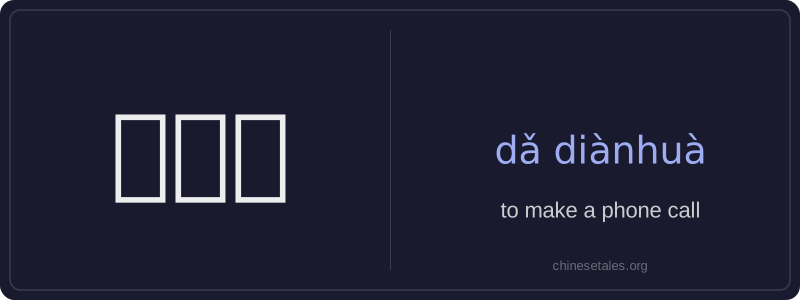
'Dǎ diànhuà' literally combines three characters: 打 (dǎ, 'to strike' or 'to perform an action'), 电 (diàn, 'electricity' or 'electronic'), and 话 (huà, 'speech' or 'words'). Together, they form the common verb meaning 'to make a phone call'. Though 打 originally suggests physical action, in modern Chinese it frequently serves as a verb prefix for technological or communicative activities — like 打电脑 (to use a computer) or 打游戏 (to play a video game). This usage reflects how language adapts to new tools.
The phrase is neutral in register and used daily across all age groups and contexts — from calling family to arranging business meetings. It’s always transitive: you must specify who or what you’re calling (e.g., 打电话给妈妈, 'call Mom') or omit the object only when context is clear. Unlike English, Chinese rarely uses 'dǎ diànhuà' as a noun; instead, the noun form is 电话 (diànhuà) alone.
Example Sentences
Related Words
见面
见面 literally means 'see face' — combining 见 (t
后来
Later (hòulái) is an adverb meaning 'afterwards'
背后
背后 literally means 'back + behind' and functions
我的
我的 (wǒ de) is a possessive pronoun meaning 'my'
这么
这么 (zhè me) is an adverb meaning 'so' or 'this
中学
'Zhōngxué' literally combines 'zhōng' (middle)
前面
前面 (qián miàn) literally combines 前 (qián, '
面条
‘面条’ (miàn tiáo) literally means ‘flour str