Word Explanation
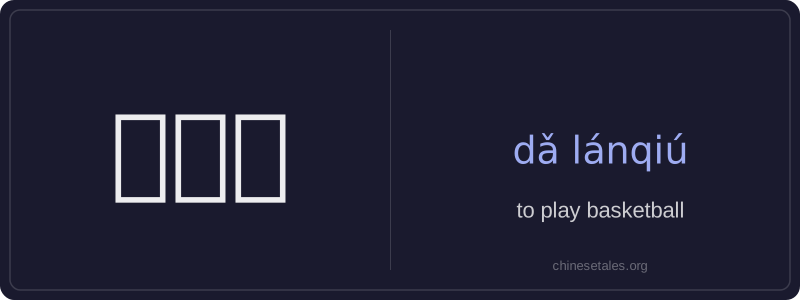
'Dǎ lánqiú' literally combines 'dǎ' (to hit/beat/play, used for many sports) and 'lánqiú' (basketball, from 'lán' meaning 'basket' and 'qiú' meaning 'ball'). It functions as a verb phrase meaning 'to play basketball' — not just the physical act of hitting the ball, but the full activity of participating in the sport. This is a common pattern in Chinese where 'dǎ' serves as a generic verb for racket, ball, or team sports (e.g., dǎ pīngpāngqiú, dǎ yóuyǒng).
The phrase is used in everyday contexts: describing hobbies, school PE classes, weekend plans, or casual exercise. It’s neutral in register — appropriate for speaking with friends, writing in diaries, or reporting in news about youth sports. Unlike English, Chinese doesn’t use articles or infinitives here; 'dǎ lánqiú' stands alone as a complete verbal action, often appearing after subject pronouns or time expressions like 'měi tiān' (every day) or 'zài xuéxiào' (at school).
Example Sentences
Related Words
见面
见面 literally means 'see face' — combining 见 (t
后来
Later (hòulái) is an adverb meaning 'afterwards'
背后
背后 literally means 'back + behind' and functions
我的
我的 (wǒ de) is a possessive pronoun meaning 'my'
这么
这么 (zhè me) is an adverb meaning 'so' or 'this
中学
'Zhōngxué' literally combines 'zhōng' (middle)
前面
前面 (qián miàn) literally combines 前 (qián, '
面条
‘面条’ (miàn tiáo) literally means ‘flour str