Word Explanation
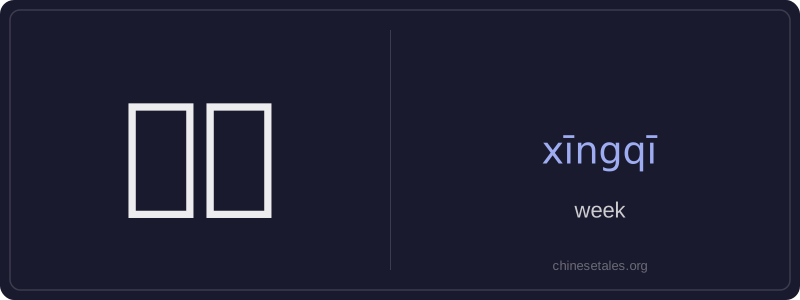
‘星期’ (xīngqī) means 'week' — a seven-day cycle used in the Chinese calendar and daily life. The character 星 (xīng) literally means 'star', historically referencing the seven classical celestial bodies (Sun, Moon, and five visible planets) that gave rise to the seven-day week in East Asian tradition. The character 期 (qī) means 'period' or 'cycle', indicating a fixed time interval. Together, 星期 emphasizes the cyclical, astronomical origin of the weekly unit.
This term is standard in modern Mandarin for referring to the week as a duration or as a framework for scheduling. It appears in expressions like ‘每个星期’ (every week), ‘上个星期’ (last week), and ‘下个星期’ (next week). Unlike the more formal or literary term ‘周’ (zhōu), which is also used for 'week', 星期 is neutral, widely understood, and preferred in spoken and everyday written contexts — especially when specifying days of the week (e.g., 星期一, Monday).
Example Sentences
Related Words
见面
见面 literally means 'see face' — combining 见 (t
后来
Later (hòulái) is an adverb meaning 'afterwards'
背后
背后 literally means 'back + behind' and functions
我的
我的 (wǒ de) is a possessive pronoun meaning 'my'
这么
这么 (zhè me) is an adverb meaning 'so' or 'this
中学
'Zhōngxué' literally combines 'zhōng' (middle)
前面
前面 (qián miàn) literally combines 前 (qián, '
面条
‘面条’ (miàn tiáo) literally means ‘flour str