Word Explanation
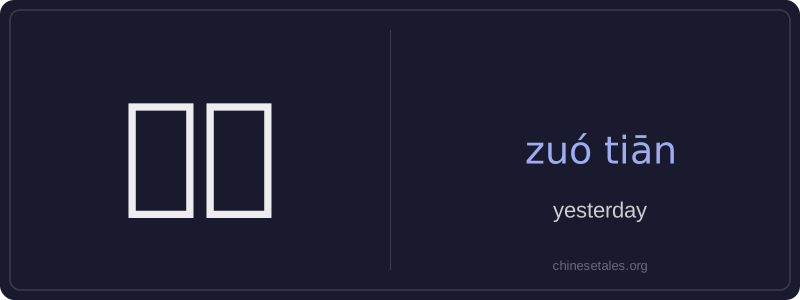
'Yesterday' is a time noun and adverb formed by combining two characters: 昨 (zuó), meaning 'previous' or 'last', and 天 (tiān), meaning 'day'. Together, they literally mean 'the previous day' — the day immediately before today. It functions flexibly in sentences: as a noun (e.g., 'yesterday was rainy') or as an adverb indicating when an action occurred (e.g., 'I went to the park yesterday').
This word is neutral in register and used widely in both spoken and written Chinese. It commonly appears at the beginning or end of a sentence, and it does not require additional particles like 了 or 过 unless needed for aspect marking. Unlike English, Chinese doesn’t change verb forms to indicate past time — 昨天 alone signals past tense, making it essential for talking about recent past events in daily conversation, weather reports, news summaries, and personal narratives.
Example Sentences
Related Words
见面
见面 literally means 'see face' — combining 见 (t
后来
Later (hòulái) is an adverb meaning 'afterwards'
背后
背后 literally means 'back + behind' and functions
我的
我的 (wǒ de) is a possessive pronoun meaning 'my'
这么
这么 (zhè me) is an adverb meaning 'so' or 'this
中学
'Zhōngxué' literally combines 'zhōng' (middle)
前面
前面 (qián miàn) literally combines 前 (qián, '
面条
‘面条’ (miàn tiáo) literally means ‘flour str