Word Explanation
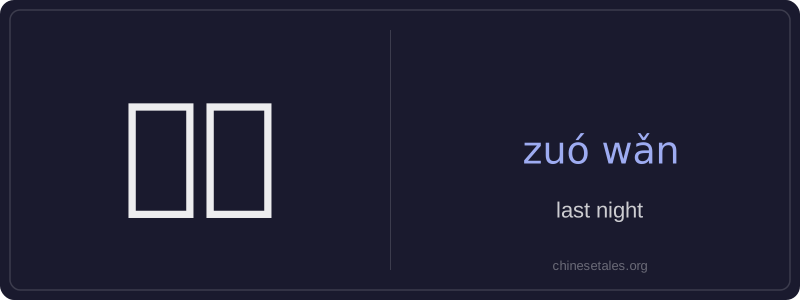
'昨晚' literally combines '昨' (zuó), meaning 'yesterday', and '晚' (wǎn), meaning 'evening' or 'night'. Together, they form a time noun meaning 'last night' — the nighttime period immediately preceding today. It refers specifically to the evening/night hours of the previous calendar day, not just any recent night.
This term is commonly used in both spoken and written Chinese to indicate when an event occurred. It functions flexibly: as a noun (e.g., '昨晚的事' — 'the matter from last night') or adverbially without particles (e.g., '昨晚我回家很晚' — 'Last night I got home very late'). Unlike English, Chinese doesn’t require prepositions like 'on' before '昨晚'; it stands alone before verbs or predicates.
Example Sentences
Related Words
见面
见面 literally means 'see face' — combining 见 (t
后来
Later (hòulái) is an adverb meaning 'afterwards'
背后
背后 literally means 'back + behind' and functions
我的
我的 (wǒ de) is a possessive pronoun meaning 'my'
这么
这么 (zhè me) is an adverb meaning 'so' or 'this
中学
'Zhōngxué' literally combines 'zhōng' (middle)
前面
前面 (qián miàn) literally combines 前 (qián, '
面条
‘面条’ (miàn tiáo) literally means ‘flour str